
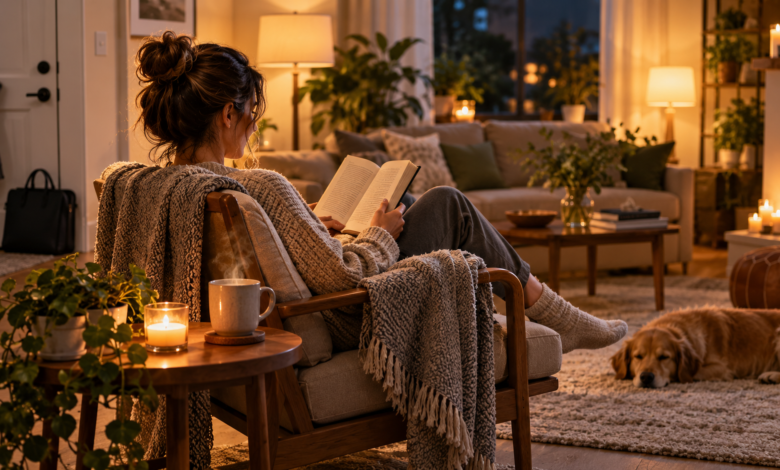
Switching off after work is a skill, and most of us are not taught
it. To relax after work, create a clear transition out of work mode,
move your body, disconnect from screens and email, and do something you
genuinely enjoy. The goal is to give your mind a real break so stress
does not follow you into the evening. You do not need hours of free
time. A few good habits make the difference. Here is how to relax after
work and protect your evenings.
For guidance on managing everyday stress, visit the American Psychological Association.
A screen-free evening can also support how to get better sleep when work stress keeps you wired.
Work stress is real and common. The American Psychological Association reports that most US adults experience stress that affects
their health, and a Gallup survey found nearly half of Americans feel
significant stress on a given day. The encouraging part: the APA also
found that habits like exercise, hobbies, and time with others genuinely
help people cope. Let us build those into your evenings.
A screen-free evening can also support how to get better sleep when work stress keeps you wired.
Table of Contents
How to Relax After Work
(Quick Answer)
The habits that help most:
-
Create a clear end-of-work ritual
-
Move your body to shake off the day
-
Disconnect from work email and screens
-
Do something you actually enjoy
-
Connect with people you care about
Put a few of these in place and your evenings become a real break,
not an extension of work. The key is to be intentional, since evenings
slip away fast when you leave them to chance.
Learning how to relax after work starts with choosing one small habit that makes your brain feel off duty.
Why Unwinding Actually
Matters
It is easy to feel guilty about relaxing, as if you should always be
productive. But downtime is not wasted time. It is how you recharge.
Constant stress with no real breaks wears you down over time,
affecting your health, mood, and even your work. Giving yourself genuine
rest in the evening is what lets you show up well the next day. Think of
it as maintenance, not indulgence. The APA research is clear that people
who use healthy coping habits feel better for it. Protecting your
evening is an investment in every other part of your life.
Create a Transition Ritual
The hardest part of relaxing after work is switching off work mode.
Your brain needs a signal that the workday is over.
Build a small ritual that marks the end of work. It could be a short
walk, changing your clothes, a few minutes of music, or simply shutting
your laptop and putting it out of sight. If you work from home, this
matters even more, since there is no commute to separate work from home.
A clear transition tells your mind it is time to relax.
That boundary is a useful part of how to relax after work, especially when you work from home.
Move Your Body
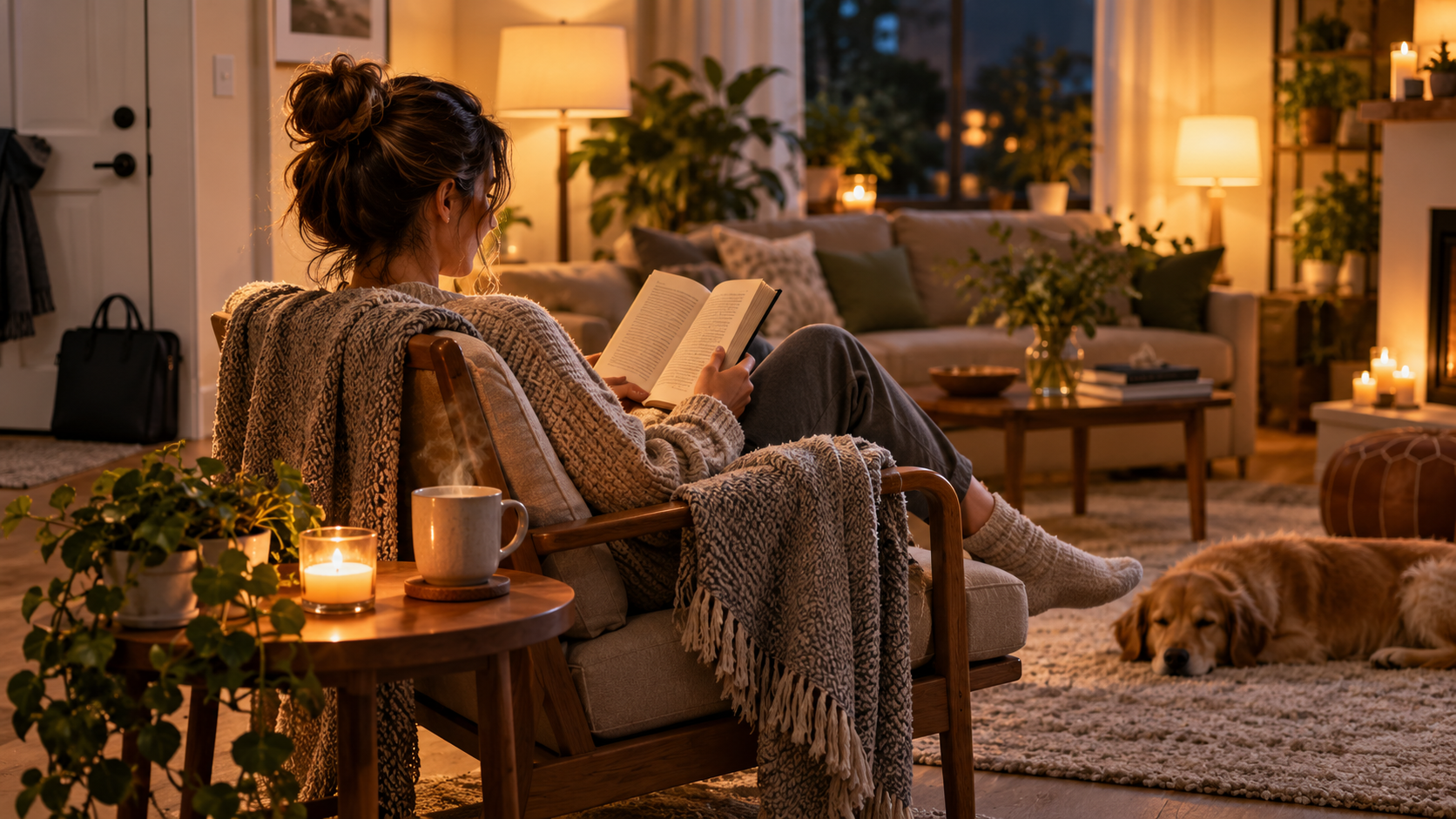
Movement is one of the best ways to shake off work stress, and the
research backs it up. The APA found that exercise is one of the coping
habits people say helps most.
You do not need a hard workout. A walk outside, some stretching, a
bike ride, or a bit of dancing all work. Movement releases tension your
body holds from a day of sitting and stress. Even ten minutes helps you
feel lighter and more present in your evening.
For many people, this is the fastest way to practice how to relax after work on a busy day.
Disconnect From Work
You cannot relax if work keeps pinging you. Truly switching off means
stepping away from the emails and notifications.
-
Turn off work email and notifications after hours
-
Resist the urge to check messages all evening
-
Keep your work devices out of sight if you can
-
Set a clear boundary on when work ends
This is hard, especially if you feel pressure to always be available.
But protecting your off-hours is essential. Work will still be there
tomorrow, and you will handle it better rested.
Do Something You Enjoy
Relaxing is not only about removing stress. It is about adding things
that bring you joy and calm.
The APA found that hobbies and enjoyable activities are among the
coping strategies people find most helpful. So make time for what you
love, whether that is reading, cooking, a craft, music, a show, or time
in nature. These activities pull your mind away from work and give your
evening meaning. Do not feel guilty about it. Enjoyment is part of a
healthy life.
Give Yourself a Buffer
Before Chores
One reason evenings feel like more work is jumping straight from your
job into cooking, cleaning, and errands. Your mind never gets a
break.
Try to build in even a short buffer between work and your evening
tasks. Ten or fifteen minutes to decompress, whether that is sitting
quietly, stepping outside, or having a drink of water and a stretch,
makes a real difference. You will move into the evening feeling reset
rather than running on fumes. The chores will still get done, and you
will feel far better doing them after a brief pause.
Ways to Unwind After Work
Here are simple ideas across a few categories. Pick what fits your
evening.
| Type | Try this |
|---|---|
| Move | A walk, stretching, or a bike ride |
| Calm | Deep breathing, a warm shower, music |
| Enjoy | A hobby, a book, cooking, a show |
| Connect | Time with family or a friend |
| Nature | A few minutes outside or in a park |
Protect Your Evenings as Time
Off
It helps to think of your evening as real time off, not a gap between
work and sleep. When you treat it as yours, you protect it better.
That means setting boundaries: not agreeing to every after-hours
request, not letting work bleed into dinner, and deciding in advance how
you want to spend the time. Even a simple plan, like a walk then a
favorite show, helps the evening feel intentional rather than something
that just slips away in a scroll. Your off-hours are when you recharge
for everything else. Treating them as valuable is not lazy, it is what
keeps you well.
What to Avoid After Work
Some common habits feel relaxing but actually keep you wired. Watch
out for these.
-
Endless scrolling, which keeps your mind busy and drained
-
Checking work email all evening
-
Too much alcohol, which harms your sleep
-
Bringing work stress to the dinner table
Swapping even one of these for a real break makes your evenings far
more restful.
Frequently Asked Questions
How do I stop thinking about work after hours?
Create a clear transition ritual to mark the end of work, then
disconnect from email and notifications. Fill the evening with movement
and things you enjoy. A firm boundary and an absorbing activity pull
your mind away from work.
What is the best way to de-stress after work? Move
your body, disconnect from work, and do something you enjoy. The APA
found exercise, hobbies, and time with others are among the most helpful
coping habits. Pick a couple that fit your evening.
Why is it hard to relax after work? Often because
there is no clear line between work and home, especially if you work
from home or stay connected to email. A transition ritual and switching
off notifications help your brain shift out of work mode.
How can I relax after work if I have very little
time? Even a few minutes helps. A short walk, some deep
breathing, or ten minutes on a hobby can reset you. It is the quality of
the break, not the length, that matters most.
Keep this guide on how to relax after work handy whenever you need a calmer transition into your evening.
Pick One Habit and Try It
Tonight
You do not need a perfect evening routine to start feeling better.
Tonight, pick one habit from this guide, like a short walk after work or
turning off email notifications, and try it. Notice how much more your
evening feels like your own. Learning how to relax after work is just
stacking small habits like these. Choose one now, and give yourself the
break you have earned.
If work stress feels constant or overwhelming, it is always okay to
reach out to a doctor or a mental health professional for support.