

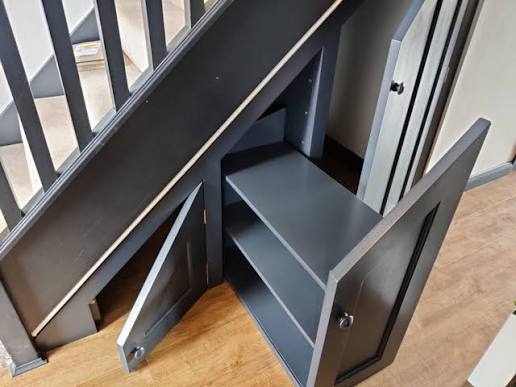
A shoe rack for under stairs is one of the best ways to use dead space most homes waste. That triangular gap under a staircase can hold dozens of shoes without taking up a single foot of extra floor space.
This guide covers how to measure the space, which rack styles fit best, and how to keep the area organized long term. Every tip here comes from real layouts, not guesswork.
Why Under Stairs Space Works So Well for Shoes
The space under a staircase is often ignored or used as junk storage. That is a waste, since it has real advantages for shoe storage specifically.
Why it works:
- The space is already boxed in on two or three sides, so shoes stay out of sight
- It sits near the front door in many homes, which is exactly where shoes get taken off
- The sloped ceiling actually works in your favor, since shoes are short and do not need much height
Most staircases rise about 7.5 inches per step, which means the usable height under the stairs grows steadily as you move away from the front point. This makes it possible to fit taller storage further back.
Step 1: Measure the Space Correctly
Before buying or building anything, get exact measurements. Guessing here leads to racks that do not fit.
What to measure:
- Height at the lowest point (closest to the front of the stairs)
- Height at the tallest point (furthest back, under the top steps)
- Total depth (front to back)
- Width (side to side, at floor level)
Write these numbers down before shopping. Many under stairs spaces range from 24 to 40 inches wide and 3 to 6 feet deep, but every staircase is different.
A Quick Sizing Reference
| Measurement | Typical Range | Why It Matters |
|---|---|---|
| Lowest height | 8 to 18 inches | Limits shoe rack style near the front |
| Tallest height | 3 to 6 feet | Determines if you can add shelves or hanging storage |
| Depth | 3 to 6 feet | Affects how many shoes you can line up |
| Width | 24 to 48 inches | Sets the rack width or number of rows |
Types of Shoe Racks That Fit Under Stairs
Not every shoe rack works in this space. The sloped ceiling rules out tall, boxy units near the front. Here are the styles that actually fit.
1. Tiered Angled Shoe Racks
These racks step upward, matching the slope of the stairs above them. Shoes sit at a slight angle, which also makes them easier to see and grab.
This is the most natural fit for under stairs storage, since the rack shape mirrors the space shape.
2. Low Profile Shoe Benches
A shoe bench works well at the lowest, front part of the space. It gives you a spot to sit while putting shoes on, plus storage underneath.
Pair this with taller shelving further back where the ceiling height increases.
3. Pull Out Shoe Drawers
For a built in look, pull out drawers hide shoes completely behind a flat front panel. This works best if you are doing a custom build rather than buying a ready made rack.
Pull out drawers also keep shoes free of dust, which matters more in homes near dusty streets or with pets that shed.
4. Open Cubby Shelving
Open cubbies, sized to fit one pair of shoes each, work well toward the back of the space where height is not limited. Each cubby keeps pairs separated and easy to find.
Built In vs Ready Made: Which One to Choose
This is the biggest decision most people face. Both options work, but they fit different situations.
| Factor | Built In Shoe Rack | Ready Made Shoe Rack |
|---|---|---|
| Cost | Higher, often $300 to $1,500+ | Lower, often $30 to $200 |
| Fit | Custom, uses every inch | May leave gaps or unused space |
| Installation time | Days to weeks | Minutes to an hour |
| Best for | Renovations, odd shaped stairs | Renters, quick upgrades, standard spaces |
If you rent your home or want a fast fix, a ready made angled rack is the easier choice. If you are renovating and want a finished look, a built in design uses the space more fully.
How to Build a Simple DIY Shoe Rack for Under Stairs
If your space is oddly shaped, building your own rack often works better than trying to force a store bought one to fit.
Basic steps:
- Measure the space at three points: front, middle, and back
- Cut plywood shelves to match the width at each point, so shelves get shorter toward the front
- Attach shelves to side supports using an angled cleat that follows the stair slope
- Sand and finish the wood to match your entryway
- Add a lip or small rail to the front edge of each shelf so shoes do not slide off
A basic three shelf version can be built in a weekend with simple tools like a saw, drill, and level. If the stairs have an open side, you do not need a full back panel, which saves material and time.
Making the Most of Limited Height
The tightest part of the space is usually right where you enter, and that is often the part that gets used the most.
Ways to work with low height areas:
- Use flat shoe slides instead of shelves in the lowest 12 inches
- Store flip flops, slippers, or flats here, since they need less vertical room than boots
- Save the taller back section for boots, sneakers, or bulkier shoes
This keeps every part of the space useful, instead of leaving the low front section empty.
Keeping the Space Organized Long Term
A shoe rack for under stairs only works if it stays organized. Clutter builds up fast in tucked away spaces since nobody sees the mess.
Simple habits that help:
- Set a hard limit on pairs per household member, based on your shelf count
- Do a seasonal swap, storing off season shoes in bins instead of on the open rack
- Add a small basket for loose items like insoles or shoe polish, so they do not clutter the shelves
Lighting and Ventilation Tips
Under stairs spaces often lack natural light, which makes it hard to find matching pairs quickly.
Quick fixes:
- Add a battery powered motion sensor light strip along the top shelf
- Use light colored wood or paint inside the space to reflect what light there is
- Leave small gaps between shelf boards instead of solid panels, which helps air circulate and reduces shoe odor buildup
Frequently Asked Questions
What is the best shoe rack for under stairs? A tiered angled shoe rack works best for most under stairs spaces, since its shape naturally follows the slope of the staircase above it.
How many shoes can fit under a staircase? This depends on the depth and width of your space, but a typical 4 foot deep, 30 inch wide area can usually hold 15 to 25 pairs across angled shelving.
Can I build a shoe rack under stairs myself? Yes. A basic version can be built in a weekend using plywood, side supports, and simple tools like a saw and drill. Custom builds work best for oddly shaped or sloped spaces.
Does a shoe rack under stairs cause odor problems? It can, if the space is closed off with no airflow. Leaving small gaps between shelves, or adding a light odor absorber like baking soda, prevents this.
Final Thoughts
The space under your stairs is one of the easiest spots in a home to put to real use. Measure it first, pick a rack style that matches the slope, and split the space by height so both short and tall shoes have a proper spot.
Start with the front, low section this weekend. Even a simple bench or shoe slide there will clear clutter fast, and you can build out the taller back section once you see how the space works for your household.