
How much fiber do you need a day? Most adults need about 25 to 38 grams, depending on age and sex. This guide makes the answer easy to use.
How Much Fiber Do You Need a Day? Quick Answer
Most people do not get nearly enough fiber. The general guidance is about 25 grams a day for women and 38 grams a day for men. Yet the average American eats only around 15 grams, and studies suggest that up to 90 to 95 percent of people fall short. Fiber keeps your digestion, blood sugar, and heart in good shape, so this gap matters. The good news is that closing it is simple once you know where fiber hides. Here is how much fiber you need a day, and easy ways to actually get it.
Fiber does not get much attention, but it is one of the most important parts of a healthy diet. Let us look at how much you need and how to reach it.
How Much Fiber Do You Need? (Quick Answer)
Here is the guidance:
Women: about 25 grams a day
Men: about 38 grams a day
A simple rule: about 14 grams per 1,000 calories
Over age 50: slightly less, as calorie needs drop
Average intake: only about 15 grams, well short
Most people need to roughly double their fiber. Here is how, and the good news is it takes only a few simple swaps rather than a whole diet overhaul.
Why So Many People Fall Short
The fiber gap is one of the most consistent shortfalls in the modern diet. According to dietary guidelines, the average American eats only about 15 grams of fiber a day, far below the recommended amount.
In fact, an estimated 90 to 95 percent of adults do not meet the recommendation. Part of the problem is confusion about which foods contain fiber, and part is the modern diet, which is heavy on refined, processed foods that have had their fiber stripped out. The more processed a food is, the less fiber it usually has.

Why Fiber Matters
Before we get to the how, here is why hitting your fiber target is worth the effort. Fiber does a lot of quiet work in your body.
Good fiber intake supports healthy digestion and prevents constipation. It helps manage blood sugar and cholesterol, and it keeps you feeling full, which helps with weight. Over the long term, a fiber-rich diet is linked to a lower risk of heart disease, type 2 diabetes, and certain cancers. For one simple nutrient, that is a remarkable list of benefits.
An Easy Day of Eating Enough Fiber
To make the target feel real, here is what a fiber-rich day can look like. It is easier than you might think.
Start with a bowl of oats topped with berries at breakfast, which can give you around 8 grams. Have a lunch built around beans or lentils, adding 10 grams or more. Snack on an apple with the peel and a handful of almonds for another 8 grams. Then have a dinner with a whole grain like brown rice or quinoa and plenty of vegetables for the rest. Just like that, you have hit or passed your target without any special effort. It is all about choosing whole, plant-based foods at each meal.
The Best High-Fiber Foods
Getting enough fiber is easy once you know where to look. It comes only from plant foods.
Beans and lentils: among the highest, with lots per serving
Whole grains: oats, brown rice, whole wheat, barley
Fruits: berries, apples with the peel, pears
Vegetables: broccoli, carrots, leafy greens
Nuts and seeds: almonds, chia seeds, flaxseeds
A good rule is to choose whole, less-processed versions of foods. Whole grains, for example, have far more fiber than their refined white counterparts.
Easy Ways to Get More Fiber
You do not need a big diet overhaul. A few simple swaps close the fiber gap fast.
Choose whole-grain bread, pasta, and rice over white
Add beans or lentils to soups, salads, and dishes
Snack on fruit, nuts, or veggies with hummus
Keep the peel on fruits and vegetables when you can
Start your day with oats or a high-fiber cereal
Small changes at each meal add up quickly. Swapping white rice for brown, or adding a handful of beans, can add several grams at a time.
High-Fiber Foods at a Glance
Here is a quick guide to some fiber-rich choices.
| Food | Fiber (about) |
|---|---|
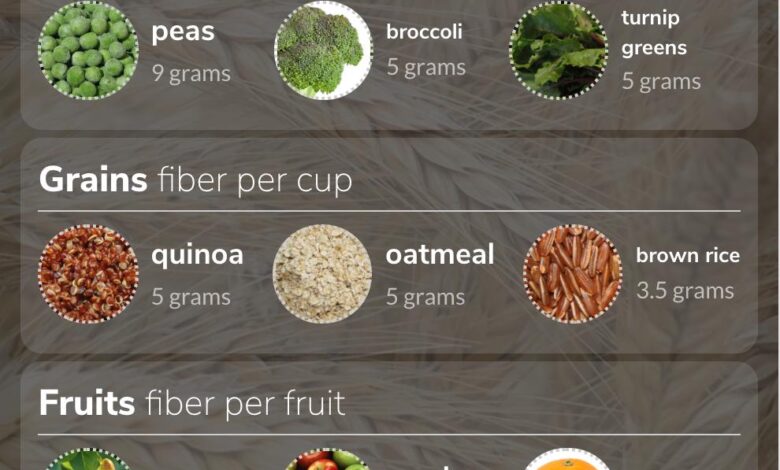
| 1 cup cooked lentils | 15 grams |
| 1 cup black beans | 15 grams |
| 1 medium apple with peel | 4 grams |
| 1 cup broccoli | 5 grams |
| 1 cup oats, cooked | 4 grams |
| 1 ounce almonds | 4 grams |
Do You Need a Fiber Supplement?
With fiber gummies and powders on every shelf, you might wonder if you need one. For most people, the answer is no.
Whole foods are the best way to get fiber, since they bring vitamins, minerals, and other benefits along with it that a supplement cannot match. A fiber supplement can help bridge the gap on days when your diet falls short, or if you struggle to eat enough fiber-rich foods, but it is not a replacement for a good diet. If you do use one, still aim to get most of your fiber from real food. Think of supplements as a backup, not the main plan.
Add Fiber Slowly and Drink Water
One important tip: do not jump from 15 grams to 38 grams overnight. Adding too much fiber too fast can cause gas, bloating, and cramping.
Increase your fiber gradually over a couple of weeks, giving your body time to adjust. And drink plenty of water as you do, since fiber works best with enough fluid. Take it slow and steady, and your body will thank you rather than protest.
Soluble vs Insoluble Fiber
You may have heard there are two types of fiber. You do not need to track them separately, but it helps to know the difference.
Soluble fiber dissolves in water and forms a gel, which helps lower cholesterol and steady blood sugar. It is found in oats, beans, apples, and citrus. Insoluble fiber does not dissolve and adds bulk, which keeps things moving through your digestive system and prevents constipation. It is found in whole grains, nuts, and the skins of fruits and vegetables. The good news is that a varied diet of whole plant foods gives you both types naturally, so you do not need to count them. Just eat a mix of fruits, vegetables, whole grains, and beans, and you get the full range.
Frequently Asked Questions
How much fiber should I eat a day? About 25 grams a day for women and 38 grams for men, or roughly 14 grams per 1,000 calories. Most people fall well short, eating only around 15 grams. Aim to reach your target gradually.
Why is fiber important? Fiber supports digestion, helps manage blood sugar and cholesterol, and keeps you full. A fiber-rich diet is linked to a lower risk of heart disease, type 2 diabetes, and certain cancers. It is one of the most beneficial nutrients.
What foods are highest in fiber? Beans, lentils, whole grains, fruits with the peel, vegetables, nuts, and seeds. Beans and lentils are among the richest, with around 15 grams per cooked cup. Whole, less-processed foods have the most fiber.
Can you eat too much fiber? Adding too much too quickly can cause gas, bloating, and cramping. Increase your fiber gradually over a couple of weeks and drink plenty of water. For most people, meeting the target is far more of a concern than exceeding it.
Add One High-Fiber Food Today
You do not need to overhaul your diet to close the fiber gap. Today, add one high-fiber food to a meal, like a handful of beans to your lunch or berries to your breakfast. Swap white bread or rice for the whole-grain version. Small steps like these, done daily, get you to your target. Start with one fiber-rich swap now, and build from there. Your digestion, your energy, and your long-term health all benefit from this one simple change.
How Much Fiber Do You Need a Day? Final Takeaway
When you ask how much fiber do you need a day, use the daily target as a guide, increase gradually, and choose more beans, whole grains, fruits, and vegetables.
For more practical support, explore a healthy, balanced lifestyle, weekly meal prep, and the Dietary Guidelines for Americans.
Daily Fiber Target Questions
How much fiber do you need a day? The usual adult target is about 25 grams for women and 38 grams for men.
When people ask how much fiber do you need a day, the best starting point is their age, sex, and usual calorie intake.
To decide how much fiber do you need a day, build toward the target gradually with whole plant foods.
Tracking how much fiber do you need a day for a few days can make practical food swaps easier to see.