
If you care about clothing quality, sustainability, and ethical shopping, you may have wondered: is J.Crew fast fashion?
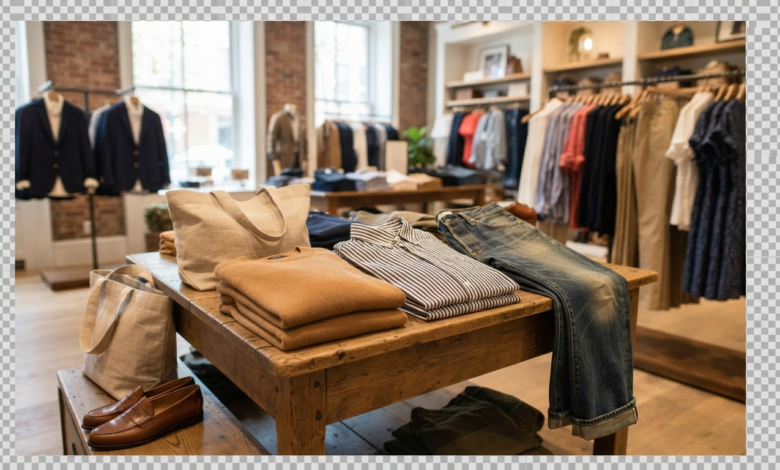
J.Crew is an American fashion retailer known for classic, preppy, and versatile clothing. The brand sells everything from sweaters and shirts to denim, dresses, accessories, and outerwear. Unlike ultra-fast fashion companies that release extremely large numbers of inexpensive styles at very short intervals, J.Crew has traditionally positioned itself around better-quality clothing and timeless designs.
However, the answer is not completely black and white.
J.Crew operates in a part of the fashion industry where seasonal trends, frequent product launches, and commercial retail practices exist alongside sustainability programs and responsible sourcing goals. The company currently reports initiatives involving sustainable fibers, Fair Trade factories, worker empowerment, circularity, and environmental targets.
So, is J.Crew fast fashion? The simplest answer is: J.Crew is generally not considered a traditional fast fashion brand, but it is also not a perfect example of sustainable or ethical fashion.
Let’s look at why.
Is J.Crew Fast Fashion?
J.Crew is generally not classified as a traditional fast fashion brand in the same way as ultra-fast fashion companies such as Shein or other businesses built around extremely rapid trend cycles and very low prices.
J.Crew has historically focused more on classic American style, seasonal collections, and products intended to stay relevant for several years.
The brand’s approach is closer to mainstream or premium high-street fashion than ultra-fast fashion.
However, this does not automatically make every J.Crew product sustainable.
What Makes a Brand Fast Fashion?
Fast fashion usually has several common characteristics:
- Very rapid production cycles
- Frequent new collections
- Low prices
- Heavy focus on current trends
- Large production volumes
- Short product life cycles
- Encouragement of frequent purchasing
The more a company depends on these characteristics, the closer it moves toward the traditional fast fashion model.
How J.Crew Is Different
J.Crew’s business model has some important differences.
The brand is known for classic wardrobe staples such as sweaters, button-down shirts, chinos, denim, coats, and tailored pieces. Many of these products are designed to remain useful beyond a single fashion trend.
J.Crew also publicly reports sustainability and responsible sourcing programs rather than operating solely around speed and low prices. Its current impact strategy focuses on products, the planet, people, and responsible business practices.
J.Crew vs. Traditional Fast Fashion
A useful way to understand is j crew fast fashion is to compare it with the characteristics normally associated with fast fashion.
| Factor | J.Crew | Traditional Fast Fashion |
|---|---|---|
| Design approach | Classic and trend-conscious | Highly trend-driven |
| Price level | Mid-range to premium | Usually low |
| Product quality | Generally positioned above budget fashion | Often designed for short-term use |
| New styles | Seasonal and frequent | Extremely frequent |
| Sustainability programs | Yes | Varies significantly |
| Sustainable materials | Used in selected products | Varies |
| Circularity initiatives | Yes | Varies |
| Main focus | Style, quality, and commercial fashion | Speed, volume, and affordability |
This comparison shows why J.Crew is usually not placed in the same category as the fastest fashion retailers.
J.Crew Sustainability: What Is the Brand Doing?
One of the most important parts of answering is j crew fast fashion is looking at the company’s sustainability efforts.
J.Crew has established a number of environmental and social programs under its broader impact strategy.
Its current goals include increasing sustainable sourcing, supporting regenerative agriculture, improving factory conditions, reducing emissions, and expanding clothing circularity.
Sustainable Materials
J.Crew uses several materials that can have lower environmental impacts when sourced and produced responsibly.
Examples include:
- Organic cotton
- Recycled cotton
- Better Cotton
- Regenerative cotton
- Recycled fibers
- Responsibly sourced wool
- More responsibly sourced cashmere
J.Crew says its material strategy includes continuing to work toward sustainably sourced priority fibers and materials. It also has goals involving regenerative cotton and land restoration.
This is an important part of J.Crew sustainability, although individual products can still differ in their materials and environmental impact.
J.Crew and Responsible Cashmere
Cashmere is another area where J.Crew has invested in responsible sourcing.
According to J.Crew Group’s impact reporting, 95% of its cashmere was sustainably sourced through recycled cashmere or verification under The Good Cashmere Standard.
The company also says that its cashmere products are designed with quality and durability in mind.
This is significant because buying a high-quality garment that can be worn for many years can reduce the need to replace it frequently.
Fair Trade Factories
J.Crew also works with Fair Trade Certified factories for some products.
The company explains that Fair Trade Certified products are made in factories that meet social, environmental, and economic standards. Workers can also benefit from premiums paid into funds managed through worker committees.
However, it is important to remember that some products being Fair Trade Certified does not mean every J.Crew product is Fair Trade Certified.
Consumers should check individual product information where possible.
Is J.Crew Ethical?
The answer depends on how you define “ethical.”
Ethical fashion can include:
- Fair wages
- Safe working conditions
- No forced labor
- No child labor
- Responsible animal sourcing
- Environmental protection
- Supply chain transparency
- Sustainable materials
J.Crew has policies covering areas such as social compliance, animal welfare, chemical management, and responsible forestry.
The company says it expects suppliers to follow responsible and legal working practices and has established policies for materials derived from animals.
Worker and Factory Programs
J.Crew’s current sustainability strategy includes worker empowerment.
The company has set a goal for 2030 and beyond to have 100% of its strategic factories enrolled in worker-empowerment programs designed around the needs of individual facilities.
This shows that labor practices are part of the company’s sustainability strategy.
Still, consumers should distinguish between having policies and goals and achieving every goal completely. Sustainability is an ongoing process, and progress can change over time.
J.Crew Sustainability and Circular Fashion
Another reason J.Crew is interesting in the sustainability conversation is its focus on circularity.
Instead of treating clothing as something that is purchased, worn briefly, and discarded, circular fashion aims to keep products in use for longer.
J.Crew has set a goal to recirculate more than five million garments by 2030 through its circularity programs.
This can include resale and other approaches that give existing clothing a longer life.
Why Circular Fashion Matters
Keeping clothing in use longer can help reduce the demand for producing completely new garments.
For shoppers, this means buying fewer but more useful pieces can be an important part of a more sustainable wardrobe.
Even the most sustainable clothing item has an environmental cost during production. Wearing a garment for years can therefore be a better approach than constantly replacing it.
Does J.Crew Make High-Quality Clothing?
Quality is another factor when considering is j crew fast fashion.
J.Crew has built much of its reputation around wardrobe staples and classic designs. Products such as sweaters, shirts, denim, coats, and trousers can potentially remain useful for many seasons when they are properly cared for.
However, quality can vary between:
- Product categories
- Materials
- Collections
- Individual garments
- Manufacturing locations
Therefore, it is better not to assume that every J.Crew product has exactly the same level of durability.
How to Check J.Crew Clothing Quality
Before buying, look at:
- Fabric composition
- Stitching quality
- Thickness of the material
- Construction
- Care instructions
- Reviews from customers
- Whether the style is likely to remain useful
A classic piece that you can wear regularly for several years can be a better purchase than a trendy item that quickly becomes unwanted.
J.Crew vs. Ethical Clothing Brands
If you are searching for ethical clothing brands, J.Crew can be considered alongside brands that put greater emphasis on sustainability and ethical production.
However, there is a difference between being a mainstream fashion retailer with sustainability initiatives and being a brand whose entire identity is built around ethical fashion.
| Category | J.Crew | Strong Sustainability-Focused Brand |
|---|---|---|
| Mainstream fashion | Yes | Sometimes |
| Classic designs | Strong focus | Often |
| Sustainable materials | Selected and increasing | Usually central |
| Ethical sourcing | Policies and programs | Usually central |
| Circularity | Growing focus | Often important |
| Sustainability reporting | Yes | Usually yes |
| Overall sustainability positioning | Developing | Core business model |
This means J.Crew can be viewed as a more responsible mainstream fashion option, but shoppers looking for the strongest possible ethical credentials may want to compare it with brands specifically built around sustainable fashion.
Is J.Crew Sustainable?
There is no simple yes-or-no answer.
J.Crew is taking measurable steps toward sustainability, including sustainable materials, responsible sourcing, factory programs, emissions goals, and circularity initiatives.
At the same time, J.Crew remains a large commercial fashion retailer. That means its overall environmental impact cannot be judged only by a few sustainable collections or individual materials.
A better way to describe J.Crew is:
J.Crew is a mainstream fashion brand with growing sustainability and responsible sourcing programs, rather than a dedicated sustainable fashion company.
How to Shop J.Crew More Sustainably
If you like J.Crew but want to reduce your fashion footprint, you do not necessarily need to stop shopping there.
Instead, consider changing how you shop.
1. Buy Fewer Pieces
Choose items that you genuinely expect to wear repeatedly.
A versatile sweater that works with jeans, trousers, and skirts can provide more value than several trend-focused pieces.
2. Choose Durable Materials
Pay attention to fabric composition and construction.
Natural fibers, quality blends, and well-made garments can sometimes provide better long-term value, although the environmental impact depends on how the materials are produced.
3. Look for Reimagined Products
J.Crew identifies certain products as “Re-imagined” based on its sustainability criteria. The company says these products either come from Fair Trade Certified factories or contain at least 30% sustainable fiber.
4. Buy Secondhand
Buying pre-owned J.Crew clothing can be one of the simplest ways to extend the life of existing garments.
It also reduces the need to purchase newly manufactured clothing.
5. Take Care of Your Clothes
Wash clothing according to care instructions and avoid unnecessary washing or harsh drying when possible.
Proper care can help garments last longer.
Pros and Cons of J.Crew Sustainability
| Pros | Cons |
|---|---|
| Uses some sustainable materials | Not every product is sustainable |
| Has responsible sourcing policies | Sustainability varies by product |
| Supports Fair Trade products | Not all products are Fair Trade |
| Has worker empowerment goals | Goals are still being developed |
| Has circularity initiatives | Large-scale fashion still has environmental impacts |
| Publishes impact information | More progress is still needed |
Frequently Asked Questions
Is J.Crew considered fast fashion?
J.Crew is generally not considered a traditional fast fashion brand. Its classic designs, higher price positioning, and focus on longer-lasting wardrobe pieces distinguish it from ultra-fast fashion retailers.
Is J.Crew a sustainable brand?
J.Crew has several sustainability programs involving materials, factories, emissions, packaging, and circularity. However, it is more accurate to describe it as a mainstream fashion brand with sustainability initiatives rather than a fully sustainable fashion company.
Is J.Crew ethical?
J.Crew has policies covering worker conditions, social compliance, animal welfare, chemical management, and responsible sourcing. Some products are also made through Fair Trade Certified factories.
Does J.Crew use sustainable materials?
Yes. J.Crew reports using materials such as organic cotton, recycled cotton, Better Cotton, regenerative cotton, and other preferred fibers.
Is J.Crew better than fast fashion?
For shoppers concerned about durability and responsible production, J.Crew can be a better choice than ultra-fast fashion retailers. However, the sustainability of a particular garment depends on its materials, manufacturing, use, and how long the item remains in your wardrobe.
What are some alternatives to fast fashion?
Consumers can consider secondhand clothing, durable wardrobe staples, certified products, repair and resale programs, and brands that focus strongly on ethical production and sustainability.
Conclusion
So, is J.Crew fast fashion?
The best answer is not in the traditional sense. J.Crew does not fit neatly into the ultra-fast fashion model associated with extremely low prices, rapid trend cycles, and constant product turnover.
Instead, J.Crew sits closer to mainstream or premium fashion, with a strong history of classic clothing and an increasing focus on sustainability and responsible sourcing.
The company currently has programs covering sustainable fibers, Fair Trade production, worker empowerment, responsible materials, emissions reduction, and clothing circularity.
However, calling J.Crew completely sustainable or fully ethical would also be too simple. The brand is still a large commercial fashion retailer, and sustainability can vary between products.
For shoppers, the best approach is to look beyond the brand name. Check the material, construction, certifications, expected lifespan, and whether you will actually wear the item many times