

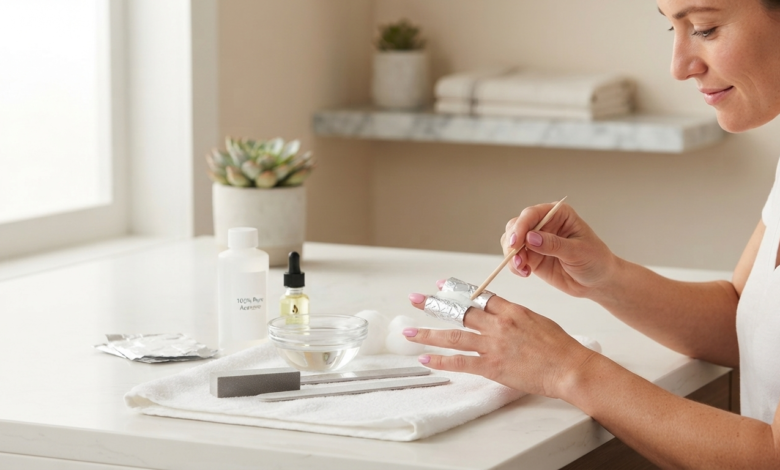
Dip powder manicures can look beautiful and last longer than regular nail polish, but removing them can be more challenging. If you do not want to visit a salon every time your manicure grows out, learning how to remove dip nails at home can save both time and money.
The good news is that dip powder can usually be removed at home with a few basic supplies. The key is to soften and dissolve the product instead of peeling, picking, or aggressively filing it away.
In this guide, you will learn how to remove dip powder nails step by step, what supplies you need, common mistakes to avoid, and how to care for your natural nails after the manicure is gone.
What Are Dip Powder Nails?
Dip powder nails are created by applying a bonding base to the natural nail and then dipping or applying the nail into colored powder. Additional layers are added before an activator and top coat are applied.
Unlike regular nail polish, dip powder creates a thicker and more durable layer over the natural nail.
A dip manicure can last for several weeks, but eventually it needs to be removed because of:
- Nail growth
- Chipping
- Cracking
- Lifting
- A new manicure
- Changes in personal preference
Because the product is designed to be durable, simply wiping it away with regular nail polish remover usually does not work.
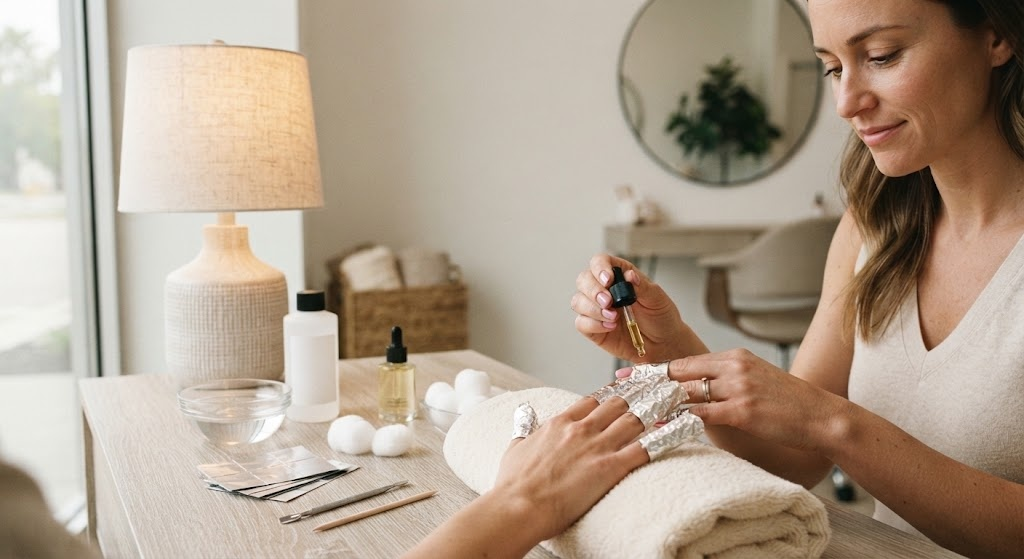
What You Need to Remove Dip Powder Nails
Before starting your dip manicure removal, gather everything you need.
| Supply | Purpose |
|---|---|
| 100% acetone | Breaks down the dip powder |
| Nail file | Removes the top layer |
| Cotton balls or cotton pads | Holds acetone against nails |
| Aluminum foil | Wraps the nails |
| Nail buffer | Smooths remaining product |
| Cuticle oil | Rehydrates nails and cuticles |
| Hand cream | Moisturizes the skin |
| Small bowl | Optional alternative for soaking |
Using pure acetone is generally more effective than regular nail polish remover because dip powder products can be resistant to ordinary remover.
How To Remove Dip Nails Step by Step
The safest approach is to work slowly and avoid damaging the natural nail underneath.
Step 1: Wash and Dry Your Hands
Start with clean, dry hands.
Remove any hand cream, oil, or other products from your nails.
Dry your hands completely before beginning.
Step 2: File the Top Coat
Use a nail file to gently remove the shiny top layer of the manicure.
You do not need to file all the way down to your natural nail.
The goal is simply to break through the top coat so the acetone can reach the layers underneath more effectively.
File gently and stop if you begin to see your natural nail.
Step 3: Prepare the Cotton and Foil
Cut or tear aluminum foil into pieces large enough to wrap around each fingertip.
Soak a cotton ball or cotton pad with 100% acetone.
The cotton should be wet enough to cover the nail but should not be dripping excessively.
Step 4: Place Acetone-Soaked Cotton on the Nail
Place the acetone-soaked cotton directly over the dip powder.
Make sure the entire nail surface is covered.
This step is important because areas that are not exposed to acetone may remain hard.
Step 5: Wrap Each Finger
Wrap the fingertip securely with aluminum foil.
The foil helps keep the cotton in place and reduces acetone evaporation.
Repeat the process for each nail.
Step 6: Wait for the Dip Powder to Soften
Allow the acetone to work for around 10–20 minutes.
The exact time can vary depending on the thickness and type of dip product.
Do not rush this step.
If the product is still firmly attached, re-wrap the nail with fresh acetone-soaked cotton and give it more time.
Step 7: Gently Remove the Softened Product
Once the dip powder has softened, gently wipe or push the loosened product away.
You can use a wooden cuticle stick or a suitable manicure tool.
Do not scrape aggressively.
If the product does not come off easily, apply acetone again rather than forcing it.
Step 8: Repeat if Necessary
Thicker dip manicures may require another round of acetone.
This is normal.
The goal is to remove the product gradually without damaging the natural nail.
Step 9: Buff Away Small Residue
Once most of the dip powder has been removed, gently buff away any small remaining residue.
Use light pressure.
Avoid excessive buffing because your natural nail can become thin or sensitive.
Step 10: Wash Your Hands
After completing the removal, wash your hands with soap and water.
This removes remaining acetone and manicure residue.
Dry your hands gently.
How Long Does Dip Powder Removal Take?
The complete removal process may take around 20–40 minutes, depending on the thickness of the manicure and how well the product responds to acetone.
| Removal Stage | Approximate Time |
|---|---|
| Filing top coat | 2–5 minutes |
| First acetone soak | 10–20 minutes |
| Gentle removal | 5 minutes |
| Additional soaking if needed | 5–15 minutes |
| Nail care | 5 minutes |
Do not focus on finishing as quickly as possible.
A slower removal process is usually better than trying to force hard product off your nails.
Can You Remove Dip Nails Without Acetone?
You can file down dip powder, but completely removing it without acetone can require significantly more filing.
This creates a greater risk of accidentally filing the natural nail.
For most people, using acetone to soften the product is the more practical approach.
If you have sensitive skin, damaged nails, or concerns about acetone exposure, consider asking a professional nail technician for advice.
How To Remove Dip Nails Without Damaging Natural Nails
Learning how to remove dip nails is only part of the process. How you remove them matters just as much.
Do Not Peel the Powder Off
Peeling or ripping off dip powder can take layers of your natural nail with it.
Even if the product starts lifting, resist the temptation to pull it away.
Do Not Scrape Aggressively
If the powder does not come off easily, it probably needs more time with acetone.
Re-soak instead of scraping harder.
Do Not Over-File
A file should remove the product’s surface, not thin your natural nail.
Stop filing when you get close to the natural nail.
Give Your Nails a Break
After removing a dip manicure, consider giving your nails some time without another heavy manicure if they feel thin, weak, or sensitive.
Dip Powder Removal: Acetone Soak vs. Filing
There are two common approaches to removing dip powder.
| Method | Advantages | Disadvantages |
|---|---|---|
| Acetone soak | Less aggressive filing | Can dry skin |
| Filing | Faster for some layers | Can damage natural nail if overdone |
| Acetone + light filing | Balanced approach | Takes some time |
| Professional removal | Expert handling | Costs more |
For at-home dip manicure removal, combining gentle filing with acetone is often a practical approach.
Nail Care After Dip Manicure Removal
Once you remove dip powder nails, your nails and surrounding skin may feel dry because of the acetone.
Give them some extra care.
Apply Cuticle Oil
Massage cuticle oil around each nail and cuticle.
This can help moisturize dry skin around the nail.
Use Hand Cream
Apply a good hand cream after washing your hands.
Pay particular attention to the areas around your nails.
Keep Nails at a Comfortable Length
If your nails feel weak after removal, consider trimming them shorter.
Shorter nails may be easier to maintain while they grow out.
Avoid Immediately Applying Another Thick Manicure
If your nails feel thin, painful, or unusually sensitive, give them time to recover before applying another long-lasting manicure.
Common Mistakes During Dip Nail Removal
Avoid these mistakes when performing dip manicure removal at home.
Using Regular Nail Polish Remover
Regular remover may not contain enough acetone to efficiently soften dip powder.
Skipping the Filing Step
If the top coat remains intact, acetone may take longer to penetrate the manicure.
Pulling Off Loose Product
Even when part of the manicure starts lifting, do not pull it off forcefully.
Filing the Natural Nail
Once most of the dip powder is gone, stop aggressive filing.
Ignoring Nail Damage
If your natural nail becomes painful, cracked, very thin, or shows unusual discoloration, stop the removal process and consider consulting a nail professional or healthcare professional if needed.
When Should You Get Professional Dip Nail Removal?
At-home removal is not always the best option.
Consider professional removal if:
- The dip powder will not soften
- Your nails are already damaged
- You have severe lifting
- Your nails are painful
- You are unsure how to remove the product
- You have a complicated manicure
- You are worried about damaging your natural nails
A professional nail technician can assess the manicure and remove it with appropriate techniques.
Frequently Asked Questions
How long does it take to remove dip nails at home?
It usually takes around 20–40 minutes, although thicker manicures may take longer. Allowing enough time for acetone to soften the product is important.
Can I peel off my dip powder nails?
No. Peeling dip powder can remove layers of your natural nail and lead to weakness or damage. It is better to soften the product with acetone and remove it gently.
What is the easiest way to remove dip powder nails?
The easiest at-home method is usually to file the top coat lightly, apply acetone-soaked cotton, wrap the nails with foil, wait for the product to soften, and then gently remove the loosened powder.
Can I use nail polish remover instead of acetone?
Regular nail polish remover may not work effectively on dip powder. 100% acetone is generally more effective for breaking down the product.
Should I buff my nails after removing dip powder?
You can lightly buff away small amounts of leftover product, but avoid aggressive buffing. Excessive filing can thin the natural nail.
How can I care for my nails after dip powder removal?
Apply cuticle oil and hand cream, keep your nails at a comfortable length, and avoid aggressive filing. If your nails feel weak or damaged, consider giving them a break before another manicure.
Conclusion
Learning how to remove dip nails at home does not have to be difficult. The most important thing is to avoid rushing the process.
Start by gently filing the top coat, then use acetone-soaked cotton and foil to soften the dip powder. Once the product becomes loose, remove it carefully rather than scraping or peeling it.
After you remove dip powder nails, give your natural nails and cuticles some extra moisture and care. If your nails are painful, severely damaged, or the product will not come off safely, professional removal is the better option.
With the right supplies and a little patience, dip manicure removal can be a simple part of your at-home nail care routine.