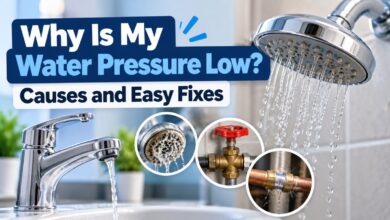

Low water pressure can make everyday household tasks frustrating. Your shower may produce only a weak stream, your kitchen faucet may take too long to fill a pot, or your washing machine may not receive enough water. Fortunately, many water pressure problems have simple causes that you can identify and fix.
If you are wondering how to increase water pressure in house, start by checking whether the problem affects one fixture or the entire property. A clogged showerhead may need cleaning, while low pressure throughout the home could indicate a valve problem, a leak, plumbing restrictions, or an issue with the municipal water supply.
This guide explains practical ways to improve water pressure, troubleshoot common problems, and determine when professional help is necessary.
What Is Normal Water Pressure in a House?
Water pressure describes the force that moves water through your plumbing system. It affects how strongly water flows from taps, showers, and other fixtures.
In many residential plumbing systems, water pressure around 40–60 psi (pounds per square inch) is generally considered a useful operating range. However, the appropriate pressure depends on your plumbing, building height, local requirements, and equipment.
Pressure that is too low can make fixtures inconvenient to use. Pressure that is too high can damage pipes, fittings, appliances, and water heaters.
Signs of Low Water Pressure
You may have a water pressure problem if you notice:
- A weak stream from kitchen and bathroom faucets
- A shower that barely sprays water
- Slow-filling toilets or washing machines
- Reduced water flow from several fixtures at once
- Water pressure that suddenly drops during normal use
- A noticeable difference between hot and cold water pressure
Before trying to increase pressure, identify whether the issue is limited to one fixture or affects the whole house.
How To Increase Water Pressure In House: 9 Practical Fixes
The best solution depends on the cause of the problem. Start with the simplest checks before investing in plumbing equipment.
1. Check the Main Water Supply Valve
One of the easiest ways to address low water pressure is to check the main water shutoff valve.
This valve controls the incoming water supply to your home. If it is partly closed, water flow throughout the property may be restricted.
How to check it:
- Locate the main water shutoff valve.
- Check whether it appears fully open.
- If it is a lever-style valve, the handle is generally parallel to the pipe when open.
- If it is a wheel-style valve, it usually opens by turning counterclockwise.
- Check whether water pressure improves afterward.
Do not force a stuck, corroded, or damaged valve. If you are unsure about its condition, contact a plumber.
2. Clean the Showerhead
A showerhead can become clogged with mineral deposits, sediment, and other debris. This is especially common in areas with hard water.
If your bathroom faucet has normal pressure but your shower is weak, a clogged showerhead may be the cause.
How to clean it:
- Remove the showerhead if the manufacturer allows it.
- Soak it in a suitable descaling solution according to the product instructions.
- Use a soft brush to remove visible deposits.
- Rinse it thoroughly.
- Reinstall it and test the water flow.
For fixed showerheads, clean the accessible spray openings according to the manufacturer’s guidance.
Regular cleaning can help increase shower water pressure when mineral buildup is restricting the flow.
3. Remove Buildup From Faucet Aerators
Faucet aerators are small attachments at the end of taps. They mix air with water and help control the flow.
Over time, sediment and mineral deposits can block the small openings.
To clean an aerator, unscrew it carefully, rinse away debris, and use a soft brush to remove buildup. Check the manufacturer’s instructions before using cleaning chemicals.
If the faucet works normally after cleaning, replacing the aerator may not be necessary.
4. Look for Plumbing Leaks
A hidden leak can reduce available water flow and waste water. Leaks may occur in exposed pipes, under sinks, behind walls, or near water storage equipment.
Look for these warning signs:
- Damp patches on walls or ceilings
- Water stains
- Unusual dripping sounds
- Wet areas around pipes
- Unexpectedly high water bills
- A water meter that continues moving when no water is being used
If you suspect a hidden leak, arrange an inspection. Avoid opening walls or attempting major pipe repairs without the necessary skills.
Fixing a leak may improve pressure when the leak is contributing to the problem.
5. Check the Water Pressure Regulator
Some homes have a pressure-reducing valve, also called a pressure regulator. It controls the pressure entering the plumbing system.
If the regulator is faulty or incorrectly adjusted, the water pressure may be lower than expected.
A plumber can measure the incoming pressure and determine whether the regulator needs adjustment or replacement.
Do not adjust the regulator blindly. Excessive pressure can damage plumbing fixtures, appliances, and pipe connections.
6. Inspect the Water Filter
Whole-house filters and other filtration systems can restrict water flow when their cartridges become clogged.
If you have a water filter, check the manufacturer’s maintenance schedule and inspect any available pressure indicator.
Replace the filter cartridge when required, using the correct replacement part. If the filter is new but water pressure remains low, the system may have been installed incorrectly or may be too restrictive for your home’s water demand.
7. Check the Hot Water System
If cold water pressure is normal but hot water pressure is weak, the problem may be related to the water heater, hot-water pipes, a mixing valve, or a fixture’s hot-water supply.
Possible causes include:
- Sediment buildup
- A partially closed isolation valve
- A clogged inlet screen
- A faulty mixing valve
- Restricted or corroded pipes
Do not open or repair a water heater unless you are qualified to do so. Gas, electricity, heat, and pressurized water can create serious hazards.
A plumber can identify whether the restriction is in the heater or elsewhere in the hot-water system.
8. Check Whether the Problem Affects the Whole House
Run water from several fixtures, one at a time. Compare the kitchen faucet, bathroom sink, shower, and other accessible taps.
If only one fixture has weak flow, the cause is more likely to be local, such as a clogged aerator or showerhead.
If every fixture has low pressure, the issue may involve the main supply, a valve, a regulator, a leak, the building’s plumbing, or the municipal supply.
If the problem started suddenly, ask your water supplier or building management whether there is a supply interruption or maintenance work in your area.
9. Consider a Water Pressure Booster Pump
If the incoming supply is consistently inadequate and simpler fixes do not help, a booster pump may be an option.
A booster pump increases pressure within a properly designed water system. However, it is not always the right solution.
Before installing one, a qualified plumber should assess:
- The incoming water pressure
- The available water supply
- Pipe sizes and condition
- The building’s height
- The required water flow
- Local plumbing rules
- Whether a storage tank or other equipment is needed
In some areas, drawing water directly from the public supply using a pump may be restricted or prohibited. The correct installation must comply with local regulations and protect the water supply.
A pump will not fix a blocked pipe, an inadequate incoming supply, or a serious leak by itself.
How To Increase Shower Water Pressure
A weak shower is one of the most common reasons homeowners look for ways to improve water pressure.
Try these steps in order:
- Clean the showerhead: Remove mineral deposits and debris.
- Check the shower hose: Look for kinks, damage, or internal restrictions.
- Test another fixture: Compare the shower with a nearby faucet.
- Check hot and cold water separately: If possible, determine whether the problem affects one supply more than the other.
- Inspect the shower valve: A worn or restricted mixing valve may need professional attention.
- Choose a suitable showerhead: A well-designed, water-efficient showerhead may provide a more satisfying spray without using excessive water.
Remember that a high-flow showerhead does not necessarily increase the pressure supplied by your plumbing system. It may simply use more water. Choose a product compatible with your home’s existing pressure and local water-efficiency requirements.
Water Pressure Problems and Their Solutions
The following table can help you identify a likely cause and decide what to do next.
| Problem | Possible Cause | Recommended Fix |
|---|---|---|
| One faucet has weak flow | Clogged aerator | Clean or replace the aerator |
| Shower pressure is low | Blocked showerhead | Clean or replace the showerhead |
| All taps have low pressure | Main valve partly closed | Check the valve position |
| Hot water is weak | Restricted hot-water supply | Arrange a plumbing inspection |
| Pressure drops suddenly | Leak or supply issue | Check for leaks and contact the supplier |
| Pressure is low throughout the house | Faulty regulator or restricted pipes | Ask a plumber to test the system |
| Water pressure varies during use | Supply limitations or excessive demand | Assess the supply and plumbing capacity |
| Pressure remains low after basic checks | Persistent supply or system problem | Consider professional diagnosis and a suitable booster system |
These are possible causes, not guaranteed diagnoses. Several plumbing problems can produce similar symptoms.
How to Measure Water Pressure at Home
If you want to understand how to increase water pressure in house more accurately, measure the pressure instead of relying only on how strong the water feels.
A water pressure gauge designed for residential plumbing can help you check static pressure.
Basic Measurement Steps
- Obtain a compatible pressure gauge.
- Attach it to a suitable threaded connection, such as an appropriate hose connection.
- Make sure the connection is secure.
- Open the supply as instructed by the gauge manufacturer.
- Read the pressure in psi or bar.
- Compare the result with the requirements for your plumbing system and local regulations.
Static pressure is measured when water is not flowing. Pressure while water is running may be lower because of restrictions, pipe size, and supply limitations.
A plumber can also perform flow and pressure tests to determine whether the problem occurs in the supply or inside the house.
Common Mistakes to Avoid
When trying to fix low water pressure, avoid making the problem worse.
Do Not Increase Pressure Without Measuring It
Blindly adjusting a regulator or installing a pump can produce excessive pressure. This may damage fixtures and appliances or contribute to leaks.
Do Not Ignore Hidden Leaks
A small leak can become a larger repair problem. Investigate dampness, unexplained water bills, or unusual meter movement.
Do Not Replace Every Fixture Immediately
If several taps have low pressure, replacing all the faucets may not solve the underlying problem. Diagnose the source before spending money.
Do Not Use Harsh Chemicals Without Checking Instructions
Some cleaning products can damage showerheads, seals, finishes, and plumbing components. Use suitable products and follow manufacturer directions.
Do Not Install an Incompatible Pump
A booster pump must match the supply, system design, and local requirements. Professional assessment helps prevent unsafe or ineffective installations.
When Should You Call a Plumber?
You can often clean an aerator or showerhead yourself. However, professional help is recommended when:
- Water pressure drops suddenly throughout the home.
- You suspect a hidden leak.
- Pipes are visibly corroded or damaged.
- The pressure regulator may be faulty.
- Hot water pressure is consistently low.
- You hear unusual noises in the pipes.
- Water pressure remains low after basic troubleshooting.
- You are considering a booster pump or major plumbing changes.
If you live in an apartment or a shared building, contact building management as well. The problem may be in the shared water supply rather than inside your individual unit.
Frequently Asked Questions
1. How can I increase water pressure in my house quickly?
Start by checking the main water valve and cleaning any clogged faucet aerators or showerheads. If all fixtures have low pressure, investigate the incoming supply, leaks, and pressure regulator before considering additional equipment.
2. What causes low water pressure in a house?
Common causes include partially closed valves, clogged fixtures, leaks, faulty regulators, restricted pipes, water filters that need maintenance, and problems with the municipal supply.
3. How do I increase shower water pressure?
Clean the showerhead, check the hose for restrictions, and inspect the shower valve if the problem continues. If other fixtures also have low pressure, the cause may be elsewhere in the plumbing system.
4. Is 40 psi enough for a house?
A pressure of 40 psi is often sufficient for many residential systems, although comfort and performance depend on the plumbing layout, building height, and simultaneous water use. Check your equipment requirements and local plumbing standards.
5. Can a booster pump fix low water pressure?
A properly selected booster pump may help when the supply pressure is inadequate and the system is suitable for one. It will not correct every problem, and installation must follow local rules and protect the water supply.
6. Why is my water pressure low only when I use hot water?
Possible causes include a restricted hot-water pipe, a problem with the water heater, sediment, or a faulty mixing valve. A qualified plumber can identify the source safely.
7. Why does my water pressure change during the day?
Demand from neighboring properties, municipal supply conditions, shared building systems, and restrictions in your plumbing can cause pressure to vary. If the changes are severe or sudden, contact your water supplier or a plumber.
8. Can a clogged showerhead reduce water pressure?
Yes. Mineral deposits and debris can restrict the water openings, resulting in a weaker spray. Cleaning or replacing the showerhead may restore normal flow if the blockage is the main cause.
9. Should I install a larger pipe to improve water pressure?
Not necessarily. Pipe size can affect flow and pressure loss, but replacing pipes without diagnosing the problem may be expensive and ineffective. A plumber should assess pipe sizing, restrictions, and the incoming supply first.
Conclusion
Learning how to increase water pressure in house starts with identifying the cause rather than immediately buying new equipment. A partly closed main valve, clogged showerhead, dirty faucet aerator, or overdue water-filter replacement may be responsible for the problem.
If the entire house has low pressure, check for supply interruptions, leaks, regulator problems, and plumbing restrictions. Measure the pressure when possible, and consult a qualified plumber if the cause is unclear or the problem continues.
A booster pump may be useful in some situations, but it should only be installed after the water supply and plumbing system have been assessed. By following these practical steps, you can find a suitable low water pressure fix, improve everyday water flow, and avoid unnecessary plumbing expenses.