
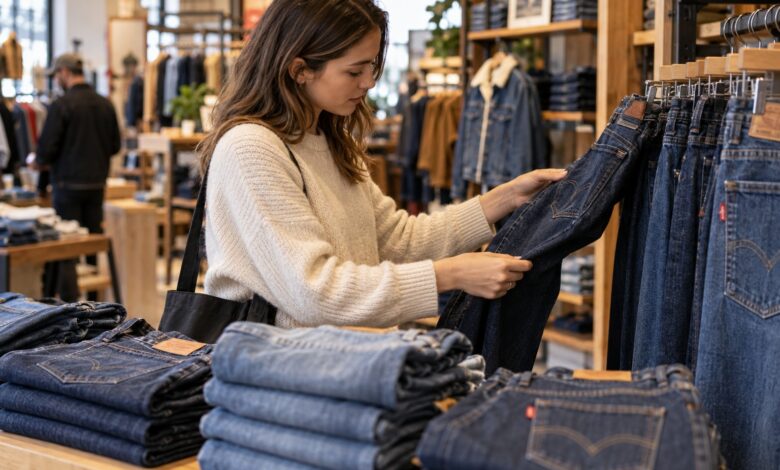
If you are trying to make more responsible clothing choices, you may wonder, is Levis fast fashion? Levi’s is one of the world’s best-known denim brands, famous for jeans, jackets, and classic everyday clothing. Unlike many ultra-fast-fashion retailers, Levi’s has a long history of producing durable denim and promoting longer garment use.
However, durability alone does not make a brand fully sustainable. Levi’s is a large global clothing company that manufactures and sells products at scale, which means its production, materials, transportation, and supply chain all have environmental and social impacts.
The short answer is that Levi’s is not typically considered an ultra-fast-fashion brand, but it is also not completely sustainable. The company has introduced water-saving techniques, preferred materials, repair initiatives, and circular-fashion projects. These efforts are meaningful, but the overall impact depends on how products are manufactured, how many are produced, and how long consumers use them.
To understand whether Levi’s is sustainable, it helps to look at its business model, materials, environmental initiatives, and ethical practices.
What Is Fast Fashion?
Fast fashion is a clothing business model focused on producing inexpensive styles quickly to meet changing trends. Brands often release new collections frequently and encourage consumers to buy clothing regularly.
The model can create problems when speed and low prices take priority over garment durability, responsible sourcing, and worker welfare.
Common Characteristics of Fast Fashion
Fast-fashion brands often have several of these characteristics:
- Frequent new product releases.
- Trend-focused designs that quickly go out of style.
- Low prices that encourage frequent purchases.
- Large production volumes.
- Short garment lifespans.
- Heavy use of resource-intensive materials.
- Limited opportunities for repair, reuse, or recycling.
Not every characteristic applies equally to every brand. Fast fashion exists on a spectrum, so a company should be evaluated by its actual production practices rather than its popularity or price alone.
Is Levi’s Considered a Fast-Fashion Brand?
When asking is levis fast fashion, it is important to distinguish traditional denim manufacturing from the rapid trend cycles associated with ultra-fast fashion.
Levi’s is an established denim company with products such as the 501 jeans and Trucker jackets. Many of its designs are classic rather than tied to short-lived trends, and the company promotes the durability and long-term use of its products.
However, Levi’s also operates globally, sells a broad range of apparel, and produces clothing at commercial scale. Those characteristics mean its operations still have environmental and supply-chain impacts.
Why Levi’s Is Different From Ultra-Fast Fashion
There are a few important differences:
1. Classic designs: Many Levi’s products are designed around familiar styles that can remain wearable for years.
2. Durability: Jeans and denim jackets can often be worn repeatedly and repaired when necessary.
3. Longer product use: Levi’s promotes resale, repair, reuse, and other approaches intended to extend the life of clothing.
4. Sustainability initiatives: The company reports efforts involving water stewardship, preferred materials, circularity, and worker well-being.
These points distinguish Levi’s from the most trend-driven, ultra-fast-fashion business models. However, they do not automatically make every Levi’s product environmentally friendly.
Levi’s Sustainability: What Is the Company Doing?
Levi’s sustainability strategy focuses on areas including climate, consumption, and community. The company reports initiatives intended to reduce environmental impacts, improve material sourcing, and support people in its supply chain. Its official sustainability website explains these priorities.
Here are some of the main areas to consider.
1. Water-Saving Denim Production
Traditional denim production can use substantial amounts of water, particularly during cotton cultivation and certain finishing processes.
Levi’s has developed its WaterLess techniques to reduce water use during selected denim finishing processes. The company also reports working with suppliers on water stewardship and more efficient production methods.
These initiatives can help reduce environmental impact, but results vary by product and manufacturing process. Water savings during finishing do not eliminate the water required to grow cotton or manufacture the entire garment.
2. More Responsible Materials
Levi’s has explored materials such as organic cotton, recycled fibers, and other preferred or certified materials.
Its circular-fashion work includes products designed with recycled content and materials intended to make future reuse or recycling easier. The company’s circular economy information describes its work toward longer product life and more circular apparel.
However, not every Levi’s product uses the same materials. Consumers should check the material composition and product details instead of assuming that all items meet the same sustainability standards.
3. Repair, Resale, and Reuse
One way to reduce clothing waste is to keep existing garments in use for longer.
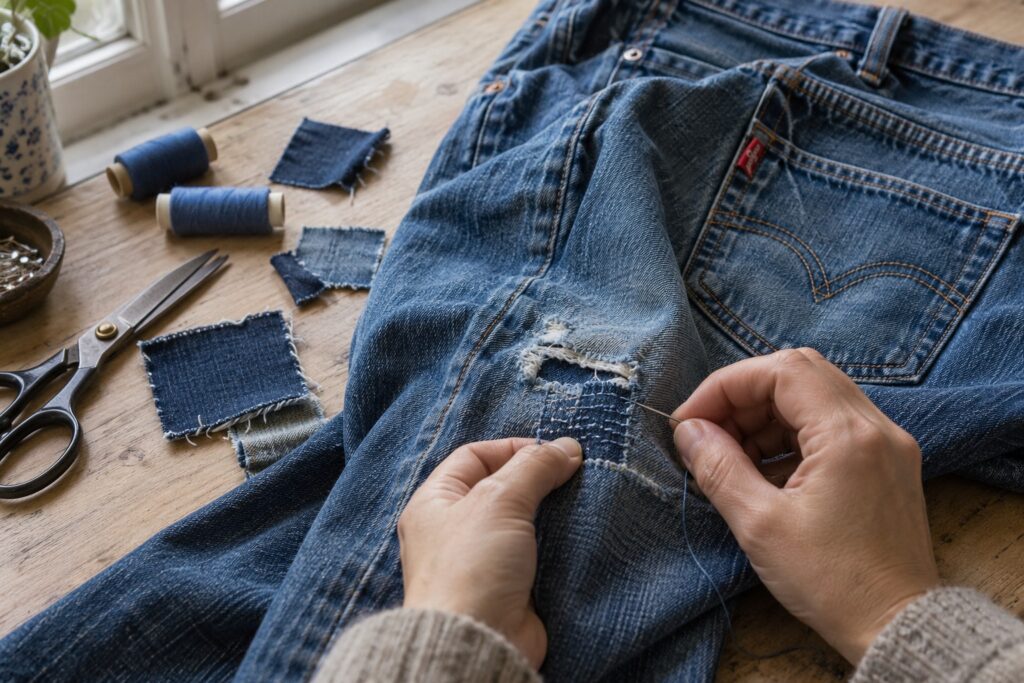
Levi’s has promoted repair, customization, resale, and secondhand clothing initiatives. Its approach encourages customers to repair damaged jeans, reuse older items, or pass clothing on to another person rather than immediately replacing it.
This is a useful part of Levi’s sustainability strategy because extending a garment’s life can reduce the need to purchase replacements.
4. Climate and Supply-Chain Goals
Levi Strauss & Co. reports climate-related goals and efforts to improve practices across its operations and supply chain.
The company also discusses waste reduction, material sourcing, and worker well-being in its sustainability reporting. You can review its sustainability reports and metrics for details about its stated goals and progress.
It is important to distinguish between a target and a completed result. A sustainability goal describes what a company intends to achieve; progress reports help show what has actually changed.
Is Levi’s Sustainable?
The question is levi’s sustainable does not have a simple yes-or-no answer. Levi’s has introduced several initiatives intended to improve its environmental and social performance, but sustainability involves the entire life cycle of clothing.
That includes raw materials, manufacturing, worker conditions, shipping, consumer use, and what happens to garments when they are no longer wanted.
Environmental Impact of Levi’s Jeans
Denim production can affect the environment in several ways:
- Cotton farming requires land and water.
- Dyeing and finishing processes use resources and chemicals.
- Manufacturing consumes energy.
- Transport creates emissions.
- Discarded clothing contributes to textile waste.
Levi’s has worked on some of these issues, but the brand’s overall environmental impact cannot be judged from one initiative alone.
How Durable Are Levi’s Products?
Durability is one of the strongest reasons some shoppers choose Levi’s. A well-made pair of jeans can remain useful for years if it is cared for properly.
Long-lasting clothing can be a more responsible purchase when you wear it regularly instead of replacing it after a short time.
Nevertheless, durability depends on the particular product, its fabric, construction, fit, and how it is used. Not every item from the same brand will last equally long.
Levi’s vs. Fast-Fashion Brands
The table below compares general business characteristics. It is not a formal sustainability ranking, because individual products and company practices can differ.
| Factor | Levi’s | Typical Ultra-Fast-Fashion Model |
|---|---|---|
| Main product identity | Classic denim and casual clothing | Rapidly changing trends |
| Product lifespan | Many items are designed for repeated use | Can vary; some items are intended for short-term trends |
| New styles | Seasonal collections and ongoing product ranges | Often frequent trend-driven releases |
| Repair and reuse | Promotes repair, resale, and longer use | Availability varies by brand |
| Sustainability initiatives | Reports water, materials, climate, and circularity efforts | Depends on the company |
| Overall sustainability | Progress exists, but challenges remain | Varies widely, with concerns around high-volume production |
The comparison suggests that Levi’s differs from the most trend-driven fast-fashion model. However, a classic design or a repair program does not prove that every product has a low environmental impact.
Levi’s Sustainability: Pros and Cons
If you are considering buying Levi’s, it helps to weigh the positive efforts against the remaining challenges.
| Potential Benefits | Limitations |
|---|---|
| Many classic styles remain wearable for years | Global production still uses resources |
| Water-saving production initiatives | Water use remains part of cotton and textile production |
| Repair and resale initiatives | Access and availability can vary by location |
| Work on preferred and recycled materials | Material choices vary between products |
| Public sustainability reporting | Targets and claims need to be assessed against results |
| Denim can be reused or resold | Recycling blended materials can be challenging |
This balanced view is more useful than describing Levi’s as either completely sustainable or entirely unsustainable.
How to Shop Levi’s More Sustainably
If you want to buy Levi’s while reducing your clothing footprint, you do not necessarily need to avoid the brand altogether. Your purchasing habits can make a difference.
1. Buy Jeans You Will Wear Often
Choose a style, color, and fit that suit your everyday wardrobe. A pair of jeans you wear regularly is generally more useful than an item that stays in your closet.
2. Consider Secondhand Levi’s
Look for pre-owned Levi’s jeans through reputable secondhand stores, resale websites, or local thrift shops.
Buying secondhand can extend the life of existing clothing and reduce demand for new production.
3. Repair Rather Than Replace
Small holes, loose buttons, and minor seam damage may be repairable. A tailor or denim repair service can help extend the life of a favorite pair.
4. Check Product Materials
Read the product description and fabric label. Look for clear information about cotton content, recycled fibers, and any relevant third-party certifications.
Do not assume that every product from a brand has identical environmental benefits.
5. Wash Clothes Thoughtfully
Wash jeans when they need cleaning rather than automatically after every brief wear. Follow the care label, use an appropriate washing cycle, and air-dry when practical.
Good care can help clothing remain wearable for longer.
6. Avoid Unnecessary Purchases
The most sustainable item is often one you already own. Before buying new jeans, consider whether you can repair, restyle, or reuse something in your wardrobe.
Are There Alternatives to Levi’s?
If sustainability is a major priority, compare Levi’s with other denim and clothing brands based on product quality, materials, supply-chain transparency, and repair or resale options.
You can also consider:
- Secondhand and vintage denim.
- Local clothing brands that publish clear sourcing information.
- Brands offering repair services.
- Clothing made with verified preferred or recycled materials.
- Durable items that match your needs and personal style.
No brand should be considered sustainable based on marketing alone. Look for specific evidence, clear reporting, and product-level details.
Frequently Asked Questions
Is Levis fast fashion?
Levi’s is not usually associated with the ultra-fast-fashion model built around rapidly changing trends. It is a large global denim brand with classic styles and sustainability initiatives, but its production still has environmental and supply-chain impacts.
Is Levi’s sustainable?
Levi’s has sustainability programs focused on water use, materials, circularity, climate, and worker well-being. However, the company is not impact-free, and sustainability varies by product and manufacturing process.
Does Levi’s use sustainable materials?
Levi’s has reported using or developing products with materials such as organic cotton and recycled fibers. Material composition varies by product, so check the label or official product description before buying.
Does Levi’s help reduce water waste?
The company has introduced WaterLess techniques intended to reduce water use in selected denim finishing processes. These efforts address part of denim production, but they do not eliminate water use across the full product life cycle.
Are Levi’s jeans better than fast-fashion jeans?
They may be a better long-term choice if you select a durable pair and wear it for years. However, quality and environmental impact vary by product, so compare construction, materials, care needs, and expected lifespan rather than relying on the brand name alone.
How can I make my Levi’s jeans last longer?
Follow the care label, avoid unnecessary washing, repair minor damage, and store your jeans properly. If you no longer wear them, consider resale, donation, or reuse options.
Conclusion
So, is levis fast fashion? Levi’s is generally different from ultra-fast-fashion brands because of its long-established denim identity, classic styles, and efforts to promote durability, repair, resale, and more responsible production.
However, is levi’s sustainable? The answer is more complicated. Levi’s has made efforts involving water conservation, preferred materials, circularity, climate, and worker well-being, but it remains a large-scale clothing business with environmental and supply-chain challenges.
If you want to shop more responsibly, focus on buying fewer items, choosing durable products, checking material information, repairing clothes, and considering secondhand denim. These habits can help you get more use from the clothing you already own.
Ultimately, the most useful way to evaluate Levi’s sustainability is to look beyond its brand image and consider measurable progress, product details, and how long you actually use each item.