
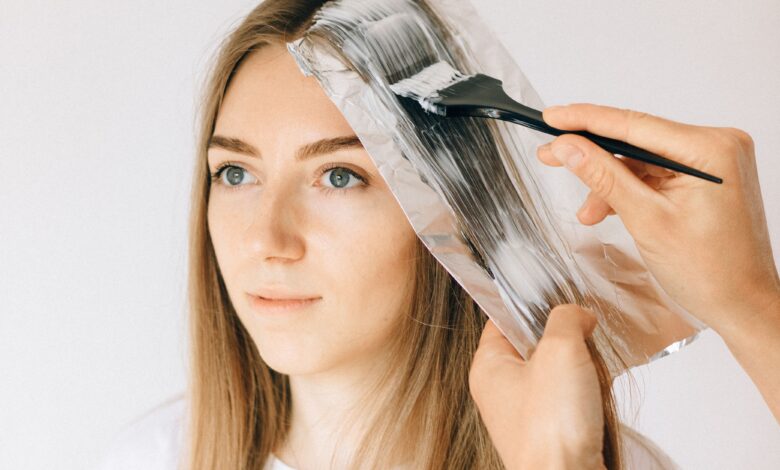
To do balayage at home you paint lightener freehand onto the surface of your hair focusing on the mid lengths and ends. There are no foils. The soft hand painted blend is what makes balayage look natural and grow out without a harsh line.
Learning how to do balayage at home takes a steady hand and patience. It is more forgiving than foils which makes it good for beginners.
Here is the method step by step.
What Is Balayage
Balayage means swept in French. The lightener is swept onto the hair by hand.
Unlike traditional highlights it is not saturated from root to tip. It starts light near the roots and gets heavier toward the ends. That mimics how the sun naturally lightens hair.
The result grows out softly with no obvious regrowth line. That is why it is so low maintenance.
What You Will Need
- A balayage or lightener kit with developer
- A tint brush and a board or comb
- A plastic or glass bowl
- Gloves
- Sectioning clips
- A timer
- Purple toning shampoo for after
Skip foils. Balayage is meant to be open air which gives the soft blend.
How to Do Balayage at Home Step by Step
Work slowly and check often.
- Start with dry unwashed hair and brush it smooth.
- Do a strand test on a hidden piece first.
- Section your hair into four parts.
- Mix the lightener exactly to the ratio in the kit.
- Take a thin section and hold it taut.
- Paint the lightener on the surface starting a few inches below the root.
- Feather it upward with light strokes so there is no hard line.
- Go heavier toward the ends where the sun would naturally lift.
- Focus on face framing pieces for the most flattering result.
- Set a timer and check every five to ten minutes.
- Rinse when you reach the shade you want.
- Tone and condition to finish.
Painting only the surface is the key. Saturating the whole strand turns balayage into ordinary highlights.
Placement Tips
| Area | How much lightener |
| Roots | None keep it soft |
| Mid lengths | Light feathered strokes |
| Ends | Heavier for a sun kissed tip |
| Face framing | A little extra to brighten |
Less is more near the roots. You can always add more but you cannot take it back.
Avoiding Brassy Results
Dark hair passes through orange while lifting.
- Lift in stages weeks apart rather than all at once
- Tone after to neutralize warmth
- Use purple shampoo weekly to maintain
- Accept a warm caramel on very dark hair rather than forcing blonde
Very dark hair rarely goes light blonde safely at home. A soft caramel balayage looks better than damaged hair.
Balayage on Different Hair Colors
Your starting color changes what to expect.
- Light brown hair. Lifts easily to soft caramel or blonde.
- Dark brown hair. Goes warm first so tone after and lift in stages.
- Black hair. Hardest to lighten. Aim for subtle warm pieces.
- Blonde hair. Needs only light painting for a sun kissed effect.
The darker your hair the more patience it takes. Trying to force pale blonde in one session is what causes damage.
Choosing Your Placement
Where you paint decides how natural it looks.
| Area | Approach |
| Around the face | Brighten with a little extra |
| Mid lengths | Light feathered strokes |
| Ends | Heavier for a sun kissed tip |
| Underneath | Leave mostly natural for depth |
Focus your brightest pieces around the face. That frames your features and looks the most flattering.
How Long Balayage Lasts
One of the best things about balayage is how it grows out.
- It fades softly with no harsh line
- You can go three to four months between sessions
- Toning every few weeks keeps it fresh
- It is lower maintenance than foil highlights
Because there is no sharp regrowth line balayage is forgiving. That makes it ideal for people who do not want frequent salon visits.
Aftercare
- Use a sulfate free shampoo
- Add a weekly deep conditioning mask
- Lower your heat styling temperature
- Use purple shampoo once a week
Balayage Mistakes to Avoid
A few common slips make home balayage look uneven.
- Saturating the whole strand. Paint only the surface.
- Starting too high. Keep the roots soft.
- Even placement everywhere. Vary it for a natural look.
- Forcing pale blonde on dark hair. Lift in stages.
- Skipping the toner. Warmth needs neutralizing.
Keep the roots soft and the ends brighter. That gradient is what makes balayage look sun kissed rather than stripey.
Frequently Asked Questions
Can you do balayage at home as a beginner?
Yes. Balayage is more forgiving than foils because the soft freehand blend hides small mistakes. Start with subtle face framing pieces and lift in stages for the safest result.
How is balayage different from highlights?
Highlights are usually saturated root to tip in foils. Balayage is hand painted on the surface starting below the roots and getting heavier toward the ends. That gives a softer more natural grow out.
How long do you leave balayage lightener on?
Check every five to ten minutes and rinse when you reach the shade you want. Times vary by hair so do a strand test first and watch the color rather than the clock.
Why did my balayage turn orange?
Dark hair lifts through orange on the way to blonde. It means the hair did not lift far enough or was not toned. Tone after lightening and consider lifting in stages.
Final Tip Before You Start
Balayage is about painting the surface and keeping the roots soft. Feather your strokes and go heavier toward the ends.
Your next step is small. Do a strand test tonight and practice the feathering motion on that piece. Once the sweep feels natural you are ready for the full look.