
Decluttering feels huge, but it does not have to be. To declutter
your home, start with one small area, sort everything into keep, donate,
and toss, and be honest about what you actually use. Do a little at a
time rather than trying to tackle the whole house in one go. Less stuff
means a calmer, cleaner, easier home. Here is a simple, low-stress
method for how to declutter your home, one area at a time, and keep it
clutter-free for good.
Research on home clutter supports this approach. A UCLA study links stressful home environments with higher cortisol levels.
A calmer space can also support your everyday self-care ideas.
Clutter is not just a visual problem. It affects how you feel. A
well-known UCLA study found that people who described their homes as
cluttered had higher levels of the stress hormone cortisol and reported
more stress and low mood. In other words, clearing the clutter is good
for your mind, not just your shelves. Here is how to do it without
burning out.
A calmer space can also support your everyday self-care ideas.
Table of Contents
How to Declutter Your
Home (Quick Answer)
The low-stress method:
-
Start with one small area, not the whole house
-
Sort items into keep, donate, and toss
-
Be honest about what you truly use
-
Take it one area at a time
-
Set up simple systems to keep it clear
Small, steady progress beats one exhausting purge every time. And
because a clearer space genuinely lifts your mood, the payoff is more
than just a tidy room.
Learning how to declutter your home is simpler when you choose a small, clear starting point.
Start Small to Avoid
Overwhelm
The biggest mistake people make is trying to declutter the entire
house at once. It is overwhelming, and most people quit halfway.
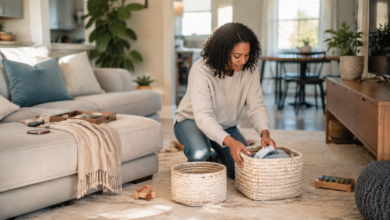
Instead, start with one small, contained area: a single drawer, one
shelf, or the kitchen counter. Finishing a small space gives you a quick
win and the motivation to keep going. You can declutter your home in
short sessions over days or weeks. Slow and steady actually finishes the
job.
That is the key to how to declutter your home without turning the process into an exhausting weekend project.
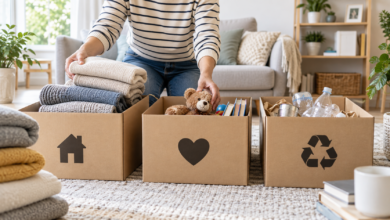
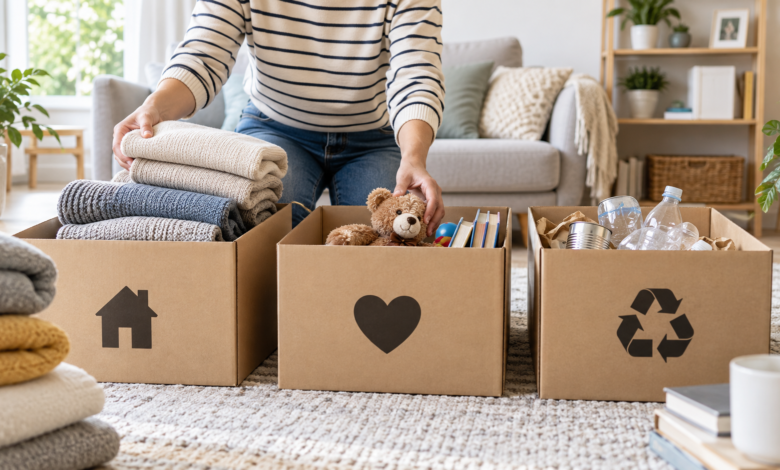
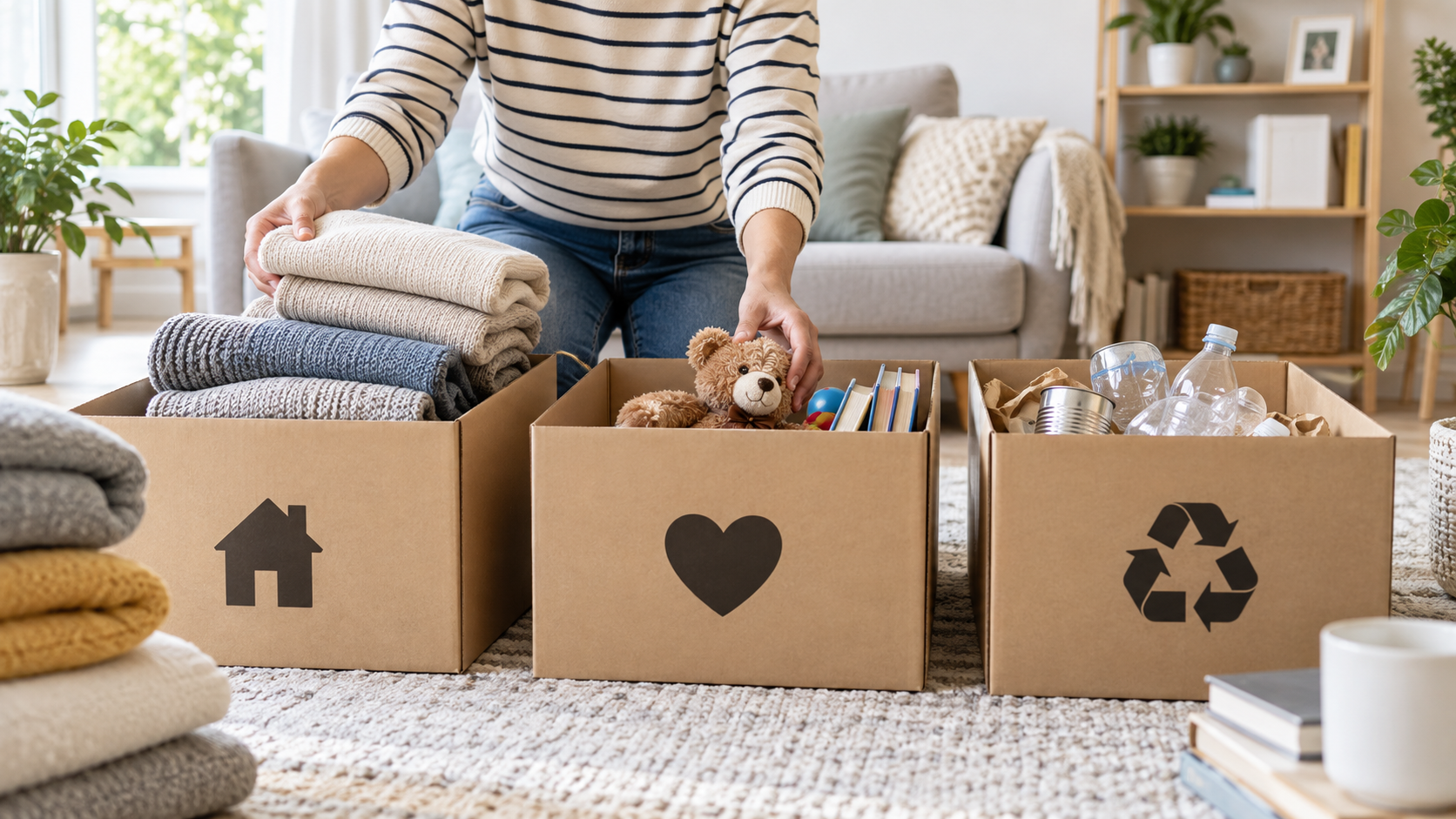
Use the Three-Box Method
A simple system makes decluttering faster and clearer. As you go
through an area, sort every item into one of three boxes.
-
Keep: things you use and truly want
-
Donate or sell: good items you no longer need
-
Toss: broken or truly useless items
The key is to handle each item once and decide. Do not create a maybe
pile, since that just moves the clutter around and leaves you to make
the same decisions twice. Be honest, and when in doubt, ask if you have
used it in the past year. If you have not, that is usually your
answer.
As you learn how to declutter your home, quick decisions prevent clutter from simply moving to another room.
Be Honest About What You Use
The heart of decluttering is letting go of things you do not use.
This is the hard part, but it is where the magic happens.
Ask yourself simple questions. Have I used this in the past year?
Would I buy it again today? Does it work, and do I have a place for it?
If the answer is no, it is probably clutter. You do not need to keep
something out of guilt. Letting it go frees up space and clears your
mind. Remember, the goal is a home that serves you, not a storage unit
for things you feel you should keep.
Set Aside a Little Time,
Regularly
You do not need a huge block of time to declutter your home. In fact,
short, regular sessions often work better than a rare marathon.
Try setting a timer for just 15 minutes and clearing whatever you can
in that window. Do it a few times a week and the progress adds up
quickly. Short sessions are easier to start, less tiring, and simpler to
fit into a busy life. This steady approach also builds the habit, so
decluttering becomes a normal part of your routine rather than a dreaded
once-a-year event.
Declutter Room by Room
Once you have the method, work through your home one area at a time.
Here is a rough order and focus for each space.
| Area | Focus on |
|---|---|
| Kitchen | Gadgets, duplicates, expired food |
| Closet | Clothes you never wear |
| Bathroom | Old products and expired items |
| Living room | Surfaces, shelves, and clutter piles |
| Paperwork | Old mail, papers, and files |
Do not rush to do them all at once. Pick one area, finish it, and
move on when you are ready.
Deal With the Emotional
Stuff
Some clutter is hard to let go of, not because it is useful, but
because of the feelings attached. Gifts, keepsakes, and things that cost
a lot are the toughest.
Here is a helpful reframe. Keeping something out of guilt does not
honor it, and holding onto an item does not mean holding onto the memory
or the person. Take a photo of sentimental items you cannot use, then
let the object go. For pricey mistakes, remember that keeping them does
not get your money back, it just costs you space. Be gentle with
yourself, and keep the few things that truly matter rather than
everything.
Keep It Decluttered
Decluttering once is not enough if the clutter creeps back. A few
simple habits keep your home clear for good.
-
Give everything a home, so it has a place to go
-
Follow a one in, one out rule for new items
-
Do a quick daily tidy to reset surfaces
-
Deal with mail and papers right away
-
Declutter a little every so often, before it builds
The goal is not a one-time purge but a home that stays easy to
manage. Once you own less and everything has a place, staying tidy takes
far less effort.
Start With the Easy Wins
When you are new to decluttering, begin with the items that are easy
to let go of. Early wins build momentum and confidence.
Start with obvious trash, expired products, broken items, and
duplicates you never use. These take almost no emotional effort to
remove, yet clearing them frees up noticeable space fast. Once you see
the difference a quick pass makes, tackling the harder categories, like
clothes and sentimental items, feels much more doable. Momentum is the
secret. Clear the easy stuff first, and let that carry you into the
rest.
Frequently Asked Questions
How do I start decluttering when I feel overwhelmed?
Start with one tiny area, like a single drawer or shelf. Finishing a
small space gives you a quick win and motivation. Decluttering your home
in short sessions over time is far less overwhelming than one big
purge.
What is the best method for decluttering? The
three-box method works well: sort each item into keep, donate, or toss,
and handle it once. Avoid a maybe pile. Be honest about what you
actually use, and when unsure, ask if you have used it in the past
year.
How do I decide what to get rid of? Ask if you have
used it in the past year, whether you would buy it again, and whether it
works and has a place. If the answer is no, it is likely clutter. Do not
keep things out of guilt.
How do I keep my home from getting cluttered again?
Give everything a home, follow a one in, one out rule, tidy a little
daily, and deal with mail right away. Owning less and having a place for
things keeps clutter from creeping back.
Pick One Drawer and Start
Today
Do not wait for a free weekend to declutter your whole house. Just
pick one small area, like a single drawer or shelf, and clear it today
using the three boxes. That one finished space will feel great and pull
you forward. Decluttering your home is simply a series of small wins
like that. Start with one drawer now, and enjoy the calmer, clearer home
that follows. Each small space you clear makes the next one easier, and
before long the whole home feels lighter.
Keep using this method for how to declutter your home whenever a room starts to feel crowded again.
Learning how to declutter your home takes steady progress, not a one-day overhaul.
One small area at a time is the easiest way to learn how to declutter your home and keep your progress going.