

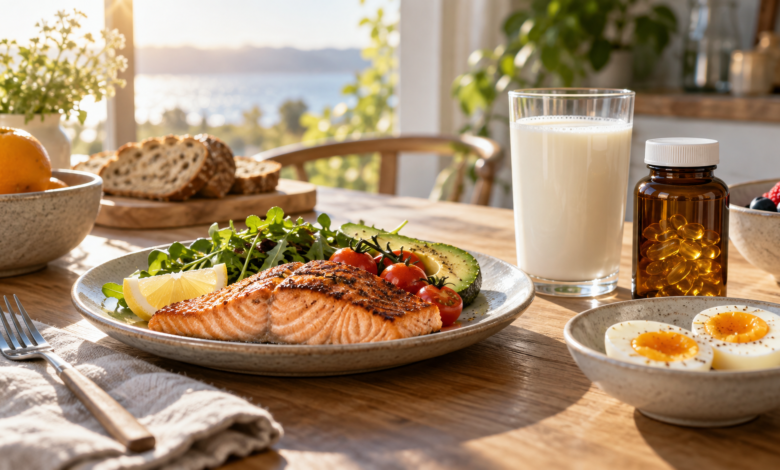
For most adults, the recommended amount of vitamin D is 600 IU, or 15 micrograms, a day, rising to 800 IU for adults over 70. This is the sunshine vitamin, made in your skin from sunlight, but very few foods contain it, which is why deficiency is so common. In fact, low vitamin D affects up to a billion people worldwide. Here is exactly how much vitamin D you need, why so many people fall short, and the best ways to get enough from sun, food, and supplements.
Vitamin D is one of the most important nutrients for your bones, muscles, and immune system, yet it is one of the easiest to run low on. Let us look at how much you need and how to get it.
How Much Vitamin D Do You Need? (Quick Answer)
Here is the guidance from health authorities:
-
Adults up to 70: 600 IU (15 micrograms) a day
-
Adults over 70: 800 IU (20 micrograms) a day
-
Main source: sunlight on your skin
-
Few foods naturally contain it
-
Upper limit: generally 4,000 IU a day for adults
Many people need a supplement to reach these levels, especially in winter.
Why Vitamin D Deficiency Is So Common
Here is a striking fact. Low vitamin D is one of the most widespread nutrient shortfalls in the world. Research suggests subclinical deficiency affects up to a billion people globally.
Why so common? Because your body makes vitamin D from sunlight, and modern life keeps many of us indoors. Add in sunscreen use, darker skin, living far from the equator, and the short days of winter, and it is easy to fall short. On top of that, very few foods naturally contain vitamin D, so diet alone often does not fill the gap. This combination leaves a lot of people low without realizing it.

Where to Get Vitamin D
There are three main ways to get your vitamin D. Most people need a mix of them.
Sunlight. Your skin makes vitamin D when exposed to sunlight. A little sun on your skin regularly helps, though this varies by season, skin tone, and where you live. Always balance this with sun safety.
Food. Few foods are naturally rich in vitamin D. The best sources are oily fish like salmon, mackerel, and sardines. Some foods are fortified, including milk, orange juice, and cereals. Egg yolks contain a little too.
Supplements. For many people, especially in winter or with limited sun, a vitamin D supplement is the most reliable way to hit the recommended amount.
Why Vitamin D Matters So Much
Before the signs, here is why this vitamin is worth caring about. Vitamin D does far more than most people realize.
Its best-known job is helping your body absorb calcium, which keeps your bones and teeth strong. Too little over time can lead to weak, brittle bones. But vitamin D also supports your muscles, your immune system, and healthy mood. Low levels have been linked to more frequent illness, fatigue, and low mood, though research is still untangling exactly how much of that vitamin D causes. What is clear is that keeping your level in a healthy range supports several important parts of your health at once, which is why the widespread shortfall matters.
Signs You Might Be Low
Vitamin D deficiency often has no obvious symptoms, which is part of why it goes unnoticed. But some signs can point to it.
-
Feeling tired or run down
-
Bone or muscle aches and weakness
-
Getting sick often
-
Low mood
-
Slow healing
These signs can have many causes, so they are not proof of deficiency. The only way to know for sure is a simple blood test, which your doctor can arrange.
How to Choose a Supplement
If you decide a supplement makes sense, a couple of things help you pick a good one. It is simpler than the crowded shelf suggests.
Look for vitamin D3, also called cholecalciferol, which raises your levels more effectively than the D2 form. A daily dose that meets the recommended amount, around 600 to 800 IU, suits most people for general maintenance, though your doctor may suggest more if you are actually deficient. You do not need a mega-dose. In fact, staying under the 4,000 IU upper limit is important unless a doctor advises otherwise. Take it with a meal that contains some fat, since vitamin D absorbs better that way.
Vitamin D deficiency often has no obvious symptoms, which is part of why it goes unnoticed. But some signs can point to it.
-
Feeling tired or run down
-
Bone or muscle aches and weakness
-
Getting sick often
-
Low mood
-
Slow healing
These signs can have many causes, so they are not proof of deficiency. The only way to know for sure is a simple blood test, which your doctor can arrange.
Vitamin D at a Glance
Here is a quick summary.
| Question | Answer |
|---|---|
| Adults up to 70 | 600 IU (15 mcg) a day |
| Adults over 70 | 800 IU (20 mcg) a day |
| Best natural source | Sunlight |
| Best food sources | Oily fish, fortified foods |
| Upper daily limit | About 4,000 IU |
For another practical nutrition guide, read how much fiber you need each day.
Who Is Most at Risk?
Some people are much more likely to be low on vitamin D. You may want to pay extra attention if you:
-
Spend little time outdoors
-
Have darker skin, which makes less vitamin D from sun
-
Live far from the equator or through long winters
-
Are older, since skin makes less with age
-
Cover your skin or use a lot of sunscreen
If several of these apply to you, it is worth talking to your doctor about testing and whether a supplement makes sense.
Balancing Sun and Skin Safety
Sunlight is your main natural source of vitamin D, but it comes with a real tension: the same sun that makes vitamin D also causes most skin aging and skin cancer risk. So how do you balance the two?
The key is that you do not need much sun to make vitamin D. Short, regular exposure is enough for many people, and you do not need to bake or burn. In fact, burning does not boost your vitamin D, it just damages your skin. For extended time outdoors, sun protection is still the smart choice, and you can top up your vitamin D through food and supplements instead. There is no need to trade your skin health for your vitamin D. A little casual sun, plus diet and a supplement if needed, covers it safely.
Frequently Asked Questions
How much vitamin D do I need a day? For most adults up to 70, the recommended amount is 600 IU (15 micrograms) a day, rising to 800 IU (20 micrograms) for adults over 70. Many people need a supplement to reach this, especially in winter.
Why is vitamin D deficiency so common? Because your body makes it from sunlight, and modern indoor life, sunscreen, darker skin, and winter all limit that. Very few foods contain vitamin D, so diet often cannot fill the gap. Low levels affect up to a billion people worldwide.
How do I know if I am low on vitamin D? Signs can include tiredness, bone or muscle aches, frequent illness, and low mood, but these are not proof. A simple blood test from your doctor is the only reliable way to know your level.
Can you take too much vitamin D? Yes. The general upper limit for adults is about 4,000 IU a day. Very high doses over time can be harmful, so do not exceed the limit without medical guidance. For most people, the recommended amounts are safe.
For the official daily-intake guidance, see the NIH vitamin D consumer fact sheet.
Get Your Level Checked
The tricky thing about vitamin D is that you often cannot feel a deficiency until it affects your health. If you spend a lot of time indoors, live somewhere with long winters, or have any of the risk factors above, ask your doctor for a simple blood test. From there you will know whether you need more sun, food, or a supplement. Take that small step now, and give your bones and immune system the vitamin D they need.