

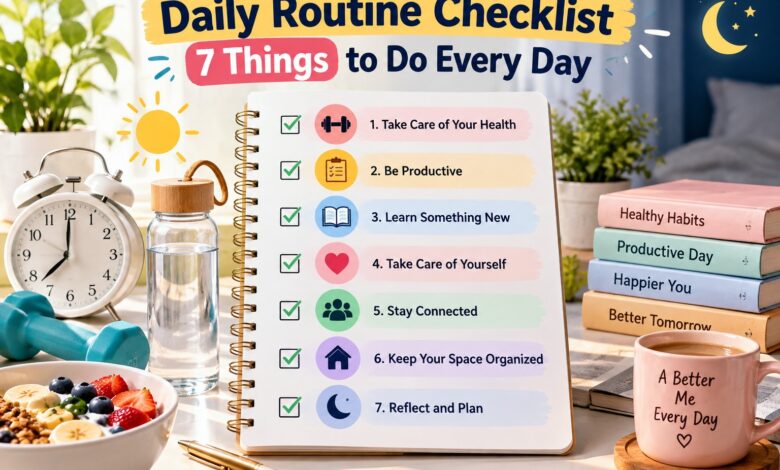
A daily routine checklist is a simple list of important activities you want to complete each day. A useful checklist can include waking up on time, drinking water, eating nutritious meals, moving your body, completing important tasks, taking breaks, and preparing for the next day. The goal is to create a realistic routine that supports your health, productivity, and well-being without making your day unnecessarily complicated.
A simple daily routine checklist can make your day easier to manage.
Instead of trying to remember everything, you can write down the habits and tasks that matter most. Checking them off throughout the day can give you a clearer sense of direction and help you stay consistent.
A busy day can quickly become overwhelming when you have too many things to remember. Work, family responsibilities, personal goals, exercise, meals, and relaxation can all compete for your attention.
The good news is that a useful routine does not need to be complicated. Seven simple habits can provide a practical foundation for a more organized day.

1. Start Your Day With a Simple Morning Routine
How you begin your morning can influence how organized you feel throughout the rest of the day.
You do not need to wake up extremely early or follow an elaborate routine. The important thing is to give yourself enough time to wake up, get ready, and start the day without unnecessary rushing.
What to Include in Your Morning Checklist
Your morning routine might include:
- Getting out of bed at a consistent time
- Drinking some water
- Washing your face and brushing your teeth
- Getting dressed
- Eating breakfast if you prefer it
- Reviewing your schedule
- Identifying your most important task
Avoid Checking Your Phone Immediately
Many people start their day by checking social media, emails, or messages.
While there is nothing inherently wrong with using your phone, immediately responding to notifications can make your morning feel reactive.
If possible, spend the first few minutes focusing on yourself and your plans for the day.
2. Drink Water and Eat Balanced Meals
Nutrition is an important part of everyday well-being.
Your daily routine checklist should include regular meals and adequate fluid intake rather than relying on convenience foods throughout the day.
Keep Healthy Food Available
You can make healthy choices easier by keeping simple foods available at home or work.
Some practical options include:
- Fresh fruit
- Vegetables
- Eggs
- Yogurt
- Whole grains
- Beans and lentils
- Nuts and seeds
- Lean protein sources
You do not need to follow a perfect diet. Focus on variety and balance.
Remember to Stay Hydrated
Keep water nearby throughout the day, particularly when you are working, exercising, or spending time in hot weather.
Your fluid needs can vary depending on your activity level, environment, diet, and individual circumstances.
3. Move Your Body Every Day
Physical activity does not have to mean spending an hour at the gym.
Walking, cycling, stretching, swimming, household activities, and recreational sports can all contribute to an active lifestyle.
Add Movement to Your Schedule
Try adding movement to your day in a way that feels realistic.
For example:
- Take a morning walk.
- Use stairs when practical.
- Walk during a lunch break.
- Stretch after sitting for a long time.
- Take an evening walk.
- Play an active game with your children.
Why Daily Movement Matters
Regular physical activity supports overall health and can contribute to physical fitness and well-being.
If you are new to exercise, start gradually and choose activities appropriate for your fitness level.
People with specific health conditions should discuss suitable exercise with a healthcare professional.
4. Complete Your Most Important Tasks
A daily routine should not only focus on health. It should also help you manage your responsibilities.
One useful habit is deciding what matters most before your day becomes busy.
Choose Your Top Three Tasks
At the beginning of the day, write down three important tasks.
For example:
- Finish an important work project.
- Pay an outstanding bill.
- Complete a study assignment.
Once these priorities are clear, you can work on them before spending too much time on less important activities.
Avoid an Overloaded To-Do List
Writing down 20 tasks may look productive, but it can quickly become overwhelming.
Instead, create a short list and separate tasks into:
- Must do
- Should do
- If there is time
This makes your routine more realistic.
5. Take Breaks and Make Time for Yourself
Productivity does not mean working continuously from morning until night.
Regular breaks can give you an opportunity to move, relax, eat, or simply step away from your work.
Use Short Breaks
If you work at a desk, stand up and move around periodically.
You could:
- Walk around the room
- Get some water
- Stretch
- Look away from your screen
- Take a few slow breaths
Schedule Personal Time
Your daily routine should also include something you enjoy.
This could be:
- Reading
- Listening to music
- Cooking
- Gardening
- Watching a favorite show
- Spending time with family
- Practicing a hobby
Personal time is not wasted time. It can help create a healthier balance between responsibilities and relaxation.
6. Review Your Day in the Evening
An evening review can help you understand what worked and what needs improvement.
You do not need to spend a long time analyzing your entire day.
Ask Yourself Three Questions
Before going to bed, consider:
What did I accomplish today?
Identify the tasks or habits you successfully completed.
What could I improve tomorrow?
Choose one realistic improvement instead of criticizing yourself for everything that went wrong.
What do I need to remember for tomorrow?
Write down important appointments, tasks, or responsibilities.
Prepare for Tomorrow
You can make the following morning easier by preparing a few things in advance.
For example:
- Choose your clothes.
- Prepare your work bag.
- Organize your desk.
- Check your schedule.
- Prepare breakfast ingredients.
- Write down tomorrow’s priorities.
A few minutes of preparation can reduce morning stress.
7. Get Enough Sleep
Sleep should be one of the most important items on your daily routine checklist.
Adults generally need around 7–9 hours of sleep per night, although individual needs can vary.
Create a Consistent Sleep Schedule
Try to go to bed and wake up at approximately the same times each day.
A consistent schedule can help establish predictable sleep habits.
Create a Relaxing Night Routine
Around bedtime, consider:
- Reducing unnecessary screen use
- Dimming bright lights
- Reading a book
- Taking a warm shower
- Preparing your bedroom
- Avoiding stressful work
- Keeping your sleeping environment comfortable
If you regularly have trouble sleeping or experience persistent daytime sleepiness, consider speaking with a healthcare professional.
Daily Routine Checklist at a Glance
A checklist tells you what to do, while a schedule helps you decide when to do it.
Here is a simple example:
| Time | Activity |
|---|---|
| 7:00 AM | Wake up and drink water |
| 7:15 AM | Get ready |
| 7:45 AM | Breakfast |
| 8:15 AM | Review daily priorities |
| 9:00 AM | Work or study |
| 12:30 PM | Lunch and short break |
| 1:00 PM | Work or study |
| 5:00 PM | Walk or physical activity |
| 6:00 PM | Personal/family time |
| 8:00 PM | Dinner |
| 9:00 PM | Prepare for tomorrow |
| 9:30 PM | Relaxing activity |
| 10:30 PM | Prepare for sleep |
This is only an example. Your routine should match your work, school, family responsibilities, and preferred sleep schedule.
How to Make Your Daily Routine Checklist Work
Creating a checklist is easy. Following it consistently is the real challenge.
Keep It Short
Start with five to seven habits rather than creating a huge list.
Make Habits Specific
Instead of writing “exercise,” write “20-minute walk.”
Instead of “eat healthy,” write “include fruit or vegetables with meals.”
Specific tasks are easier to understand and complete.
Allow Flexibility
Some days will not go according to plan.
You may have an unexpected meeting, family responsibility, appointment, or travel plan.
Missing one habit does not mean your entire routine has failed. Simply return to your normal routine the next day.
Track Progress
You can use a notebook, calendar, phone app, or printed checklist.
Checking off completed habits can make your progress visible and help you identify patterns.
Common Daily Routine Mistakes
Even a good routine can become difficult if you make it unnecessarily complicated.
Trying to Change Everything at Once
Start with a few habits and gradually add more.
Making the Routine Too Strict
A routine should provide structure, not make you feel trapped.
Ignoring Sleep
Trying to be productive while consistently sacrificing sleep can make your routine difficult to maintain.
Filling Every Minute
Leave some free time for unexpected events and relaxation.
Comparing Your Routine With Others
A routine that works for someone else may not work for you. Your schedule should reflect your own lifestyle and responsibilities.
Frequently Asked Questions
What should be included in a daily routine checklist?
A useful checklist can include morning preparation, healthy meals, hydration, physical activity, important tasks, breaks, evening preparation, and sufficient sleep.
How many things should I put on my daily checklist?
Seven items are a good starting point, but there is no fixed number. Keep your checklist realistic enough that you can follow it consistently.
Is a daily routine good for productivity?
A structured routine can help you organize priorities and reduce the number of decisions you need to make throughout the day.
Should my daily routine be the same every day?
It can be helpful to maintain certain consistent habits, especially around sleep, meals, and important responsibilities. However, your routine can remain flexible when circumstances change.
What is the best time to create a daily routine?
You can create your routine at any time. Many people find it useful to plan the next day during the evening or review their priorities in the morning.
How long does it take to build a daily routine?
There is no universal timeline. The time required depends on the habit and the individual. Focus on consistency rather than expecting your routine to become automatic immediately.
What if I miss something on my checklist?
Do not treat one missed task as failure. Continue with the rest of your day and return to the routine when you can.
Conclusion
A daily routine checklist can make everyday life more organized without requiring a complicated schedule.
The seven habits in this guide provide a simple foundation: start your morning intentionally, eat balanced meals and stay hydrated, move regularly, focus on important tasks, take meaningful breaks, review your day, and get enough sleep.
The most important thing is to create a routine that fits your real life. Start with a few simple habits, track your progress, and adjust your checklist whenever necessary.
A good routine should make your day easier to manage—not harder to live.