
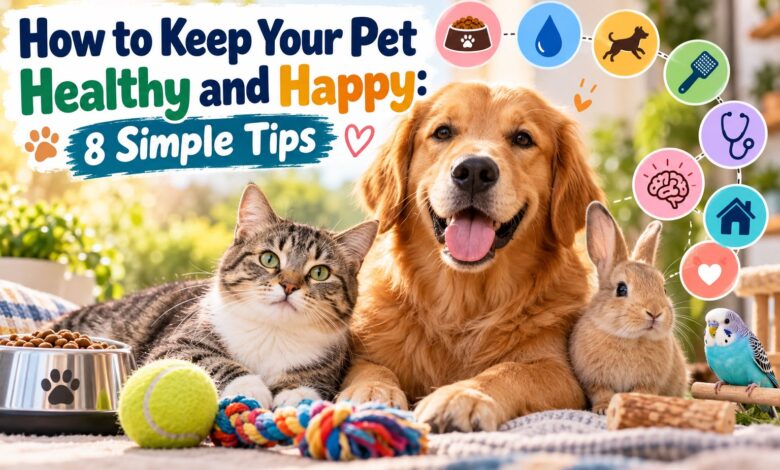
How to keep your pet healthy and happy starts with providing nutritious food, fresh water, regular exercise, proper grooming, routine veterinary care, mental stimulation, a safe home, and plenty of attention. Every pet has different needs, so their age, breed, size, lifestyle, and health should be considered when creating a care routine.
Pets are more than animals living in our homes. They can become important companions and a meaningful part of everyday family life. Whether you have a dog, cat, rabbit, bird, or another type of pet, their health and happiness depend on regular care.
Many pet owners focus mainly on food, but good pet care involves much more. Exercise, grooming, veterinary visits, mental stimulation, social interaction, and a safe environment all play important roles.
Learning how to keep your pet healthy and happy does not have to be complicated. Small habits performed consistently can make a big difference to your pet’s quality of life.
In this guide, we will cover eight practical ways to support your pet’s physical health, mental well-being, and everyday happiness.
How to Keep Your Pet Healthy and Happy: 8 Essential Tips
Different animals have different needs, but several basic principles apply to most household pets.
| Pet Care Habit | Main Benefit |
|---|---|
| Balanced nutrition | Supports overall health |
| Fresh water | Helps maintain hydration |
| Regular exercise | Supports fitness and mobility |
| Grooming | Helps maintain cleanliness |
| Veterinary care | Helps monitor health |
| Mental stimulation | Reduces boredom |
| Safe environment | Reduces preventable risks |
| Love and attention | Supports emotional well-being |
Let’s look at each habit in more detail.
1. Provide a Balanced and Nutritious Diet
Food is one of the most important parts of pet care.
Pets need appropriate nutrition to support normal growth, energy, healthy body function, and overall well-being. The right diet depends on the type of animal, age, size, activity level, and individual health needs.
Choose Food Appropriate for Your Pet
Dogs, cats, birds, rabbits, and other animals have different nutritional requirements.
Choose food that is specifically designed for your pet rather than assuming that food suitable for humans is also suitable for animals.
Avoid making major changes to your pet’s diet suddenly.
Control Treats
Treats can be useful for training and bonding, but too many treats may contribute to excessive calorie intake.
Keep treats appropriate for your pet and consider them as part of their overall diet.
If you are unsure about your pet’s nutritional requirements, ask your veterinarian for personalized advice.
2. Make Fresh Water Available
Proper hydration is another important part of how to keep your pet healthy and happy.
Your pet should generally have access to clean, fresh water appropriate for their species and needs.
Simple Water Habits
- Change drinking water regularly.
- Keep water containers clean.
- Place water somewhere easily accessible.
- Check the water supply throughout the day.
- Consider additional water sources if recommended for your pet.
Some animals may drink more or less depending on weather, diet, activity, and health.
If you notice a significant change in your pet’s drinking habits, contact a veterinarian for advice.
3. Give Your Pet Regular Exercise
Exercise helps pets stay active and supports their physical well-being.
The amount of activity your pet needs depends on their species, age, breed, health, and personality.
Dogs may enjoy:
- Walking
- Running
- Playing fetch
- Outdoor activities
- Interactive games
Cats may enjoy:
- Interactive toys
- Chasing toys
- Climbing structures
- Short play sessions
Other animals may need different forms of movement.
Create an Activity Routine
Try to make physical activity a regular part of your pet’s day.
A consistent routine can help prevent boredom and give your pet something positive to look forward to.
Do not force intense activity on an animal that is elderly, injured, or showing signs of discomfort. Ask your veterinarian about appropriate exercise if you have concerns.
4. Keep Your Pet Clean and Well-Groomed
Grooming is another important part of how to keep your pet healthy and happy.
Regular grooming can help keep your pet comfortable and allow you to notice changes such as skin irritation, unusual lumps, parasites, or other problems.
Basic Grooming May Include
- Brushing the coat
- Bathing when appropriate
- Nail trimming
- Ear care
- Dental care
- Checking the skin and coat
Different pets need different grooming schedules.
For example, some animals require frequent brushing while others need much less grooming.
Make Grooming a Positive Experience
Start slowly, especially with a young or nervous pet.
Use gentle handling and reward calm behavior when appropriate.
If professional grooming is needed, choose a qualified and experienced groomer.
5. Schedule Regular Veterinary Care
Regular veterinary care is one of the most important parts of maintaining your pet’s health.
Routine checkups can help identify potential health problems and allow your veterinarian to provide appropriate preventive care.
Depending on your pet, veterinary care may include:
- Routine examinations
- Vaccinations
- Parasite prevention
- Dental checks
- Weight monitoring
- Nutrition advice
- Age-related health monitoring
Pay Attention to Changes
You know your pet’s normal behavior better than anyone.
Changes in appetite, activity, behavior, drinking, bathroom habits, breathing, or appearance may sometimes indicate a health problem.
If something seems unusual or concerning, contact your veterinarian rather than waiting for the problem to become worse.
6. Give Your Pet Mental Stimulation
Physical health is only one part of how to keep your pet healthy and happy.
Pets can become bored when they have nothing interesting to do.
Mental stimulation gives them opportunities to explore, learn, and interact with their environment.
Simple Mental Activities
For dogs:
- Puzzle toys
- Training games
- Hide-and-seek
- New walking routes
- Scent games
For cats:
- Interactive toys
- Puzzle feeders
- Safe climbing areas
- Play sessions
- Toys that encourage natural behaviors
Choose activities that are suitable for your pet’s species and personality.
7. Create a Safe and Comfortable Home
A safe home environment is essential for pet wellness.
Look around your home from your pet’s perspective and identify possible hazards.
Pet Safety Checklist
| Potential Hazard | What to Consider |
|---|---|
| Electrical wires | Keep them inaccessible |
| Toxic substances | Store them securely |
| Small objects | Prevent swallowing |
| Unsafe plants | Check whether they are pet-safe |
| Open windows | Use appropriate protection |
| Cleaning products | Keep containers closed |
| Hot surfaces | Prevent accidental contact |
| Outdoor areas | Make sure they are secure |
The exact risks depend on the type of pet you have.
A safe environment gives your pet more freedom to explore while reducing preventable accidents.
8. Give Your Pet Love, Attention, and Social Interaction
One of the simplest answers to how to keep your pet healthy and happy is to spend quality time with them.
Pets can benefit from positive interaction with their owners.
Depending on the animal, this may include:
- Playing together
- Gentle grooming
- Training
- Talking to them
- Taking walks
- Providing affection
- Simply spending time together
Respect Your Pet’s Personality
Not every pet wants the same amount of physical contact.
Some animals love being held and cuddled, while others prefer sitting nearby.
Pay attention to your pet’s body language and respect their boundaries.
Building trust is more important than forcing interaction.
Create a Simple Daily Pet Care Routine
A routine can make pet care easier for both you and your animal.
| Daily Task | Example |
|---|---|
| Morning | Fresh water and food |
| Morning | Exercise or play |
| Afternoon | Check water and environment |
| Evening | Exercise or interactive play |
| Evening | Grooming or bonding time |
| Night | Check that the pet is safe and comfortable |
This is only an example. Your pet’s actual routine should be based on their individual needs.
Signs Your Pet May Need Extra Attention
Knowing how to keep your pet healthy and happy also means recognizing when something may not be normal.
Pay attention to changes such as:
- Sudden loss of appetite
- Unusual tiredness
- Major changes in behavior
- Excessive scratching
- Changes in bathroom habits
- Difficulty breathing
- Unexplained weight changes
- Vomiting or diarrhea
- Signs of pain
- Sudden changes in drinking
These signs can have many possible causes.
If you are concerned about your pet’s health, contact a veterinarian for professional advice.
Common Pet Care Mistakes to Avoid
Even caring owners can make mistakes. Here are some common ones to avoid.
Giving Too Many Treats
Treats should not replace a balanced diet.
Skipping Exercise
Pets need appropriate physical activity based on their individual needs.
Ignoring Dental Care
Dental health is an important part of overall pet care.
Missing Routine Checkups
Regular veterinary care can help monitor your pet’s health.
Leaving Pets Bored for Long Periods
Mental stimulation and interaction can make everyday life more enjoyable.
Ignoring Behavioral Changes
A sudden change in behavior may deserve attention.
How to Make Pet Care Easier
You can make your routine simpler by preparing in advance.
Keep Supplies Organized
Store food, grooming supplies, toys, cleaning products, and other pet essentials in an organized location.
Set Reminders
Use reminders for veterinary appointments, grooming, medication when prescribed, and other important tasks.
Create a Feeding Routine
Consistent feeding times can make daily pet care easier.
Keep Emergency Information Available
Know how to contact your veterinarian and where to find emergency veterinary services when necessary.
Frequently Asked Questions
How to keep your pet healthy and happy every day?
Provide appropriate food, fresh water, regular exercise, mental stimulation, grooming, veterinary care, a safe environment, and positive interaction.
What is the most important thing for a healthy pet?
There is no single factor that guarantees good health. Nutrition, exercise, preventive veterinary care, safety, hygiene, and appropriate mental stimulation all contribute to overall well-being.
How much exercise does a pet need?
Exercise needs vary significantly by species, age, breed, health, and personality. Ask your veterinarian for advice if you are unsure about the appropriate activity level.
How often should I take my pet to the veterinarian?
The recommended schedule depends on the animal’s age, species, health, and individual needs. Your veterinarian can recommend an appropriate checkup schedule.
How can I make my pet happier?
Spend quality time with your pet, provide appropriate exercise and play, offer mental stimulation, maintain a comfortable environment, and learn to understand their individual preferences.
Can pets get bored?
Yes. Many pets can become bored when they lack appropriate physical activity, interaction, or mental stimulation. Toys, training, play, and environmental enrichment can help.
What should I do if my pet suddenly behaves differently?
A sudden behavior change can have different causes, including environmental or health-related issues. Monitor the change and contact your veterinarian if it is unusual, persistent, or concerning.
Is human food safe for pets?
Not all human foods are safe for animals. Some can be harmful or toxic. Check with a veterinarian before giving your pet unfamiliar foods.
Conclusion
Learning how to keep your pet healthy and happy is about creating a balanced daily routine rather than doing one special thing.
Nutritious food, fresh water, regular exercise, grooming, veterinary care, mental stimulation, safety, and positive interaction can all contribute to your pet’s overall well-being.
The most important thing is consistency. Small actions performed every day can help create a healthier and more comfortable life for your pet.
Remember that every animal is different. Your pet’s age, species, breed, size, personality, and health can affect their individual needs. When you are unsure about nutrition, exercise, behavior, or health, a qualified veterinarian can provide personalized guidance.
A healthy pet is not simply one that looks good. It is a pet that receives proper care, feels safe, has opportunities to stay active and engaged, and has a strong relationship with the people around them.